Whether you’re 55 or 75, you’ve been in this body long enough to know things.
You know the bras you’ve quietly stopped wearing. You know the underwire that used to settle has started to bite. You know the band you trusted for years now sits in the wrong place. You know “support” has begun to feel like containment.
That isn’t a problem with you. It’s the bra falling behind a body that hasn’t stopped moving and at this stage of life, you’ve earned the right to comfort.
A lot of women spend a long time trying to fix it. New brand. New size. New shape. Push-up. Demi. Plunge. Eventually, plenty of women just decide bras are uncomfortable and that’s that. But the body isn’t doing anything wrong. It’s doing exactly what bodies do — and the women in this stage are usually the ones who know that earliest.

Breast tissue softens — and what “support” actually means now
Through your forties and fifties, the glandular tissue that gave breasts their density gradually gives way to fatty tissue. This shift is normal, hormonal, and universal, and for women who breastfed, layered on top of tissue that filled and emptied through those years, never quite returning to where it started. The result is breasts that are softer, often a little fuller through the lower half, and more responsive to gravity.
A wire that worked when tissue was dense often doesn’t work when tissue is soft. It bites where it used to lift. And the kind of “support” that helps now isn’t lift-from-below, it’s even, gentle pressure across a wider area. Wire-free designs, with the right band and fabric, do this better than wired ones for many women in this stage.
Your ribcage broadens, and the band stops fitting
The thoracic ribcage gradually broadens through midlife. It’s a small change, but enough that the band size you wore at 30 may not match the body you’re in now. A band that’s too small bites soft tissue around the back. A band that’s the wrong cut digs into the diaphragm which can subtly restrict the breath. (You’d be surprised how many women describe themselves as “anxious in their bra” without quite knowing why.)
This is part of why fit doesn’t just shift up or down a band size. Sometimes the entire architecture of the bra needs to be different.
The lymphatic system gets quieter
The lymphatic system across the chest and underarm is one of the most active in the body. Through midlife, lymph flow can slow, especially around the breast tissue. Bras that compress in the wrong places - particularly tight underwires running up to the underarm - can subtly interrupt that flow.
Wire-free bras with even pressure tend to support lymphatic movement rather than restrict it. (For more on this, read our post on lymphatic breast health.)
Sensitivity changes
After menopause, many women describe heightened skin sensitivity, especially around the chest and ribcage. Underwires that were tolerable for decades suddenly aren’t. Seams you didn’t notice now feel like small knives. This isn’t oversensitivity. It’s the nervous system doing exactly what it’s meant to do.
This is one of the most common reasons women come to us in their fifties and sixties. They didn’t choose wire-free for ideology. They chose it because their body started telling them, very clearly, that it was time.
A common assumption worth questioning
Many women at this stage assume softer, heavier breasts need more wire, not less. That a wire-free bra won’t hold what time has changed. It’s one of the most common reasons women don’t make the switch and it’s worth questioning.
The assumption is mostly cultural, not physical. We’ve been taught for decades that breasts should look lifted, contained, neatly shaped and an underwire is how that shape gets created in clothing. Without a wire, breasts sit closer to how they actually sit on the body: softer, more natural, more visible as themselves.
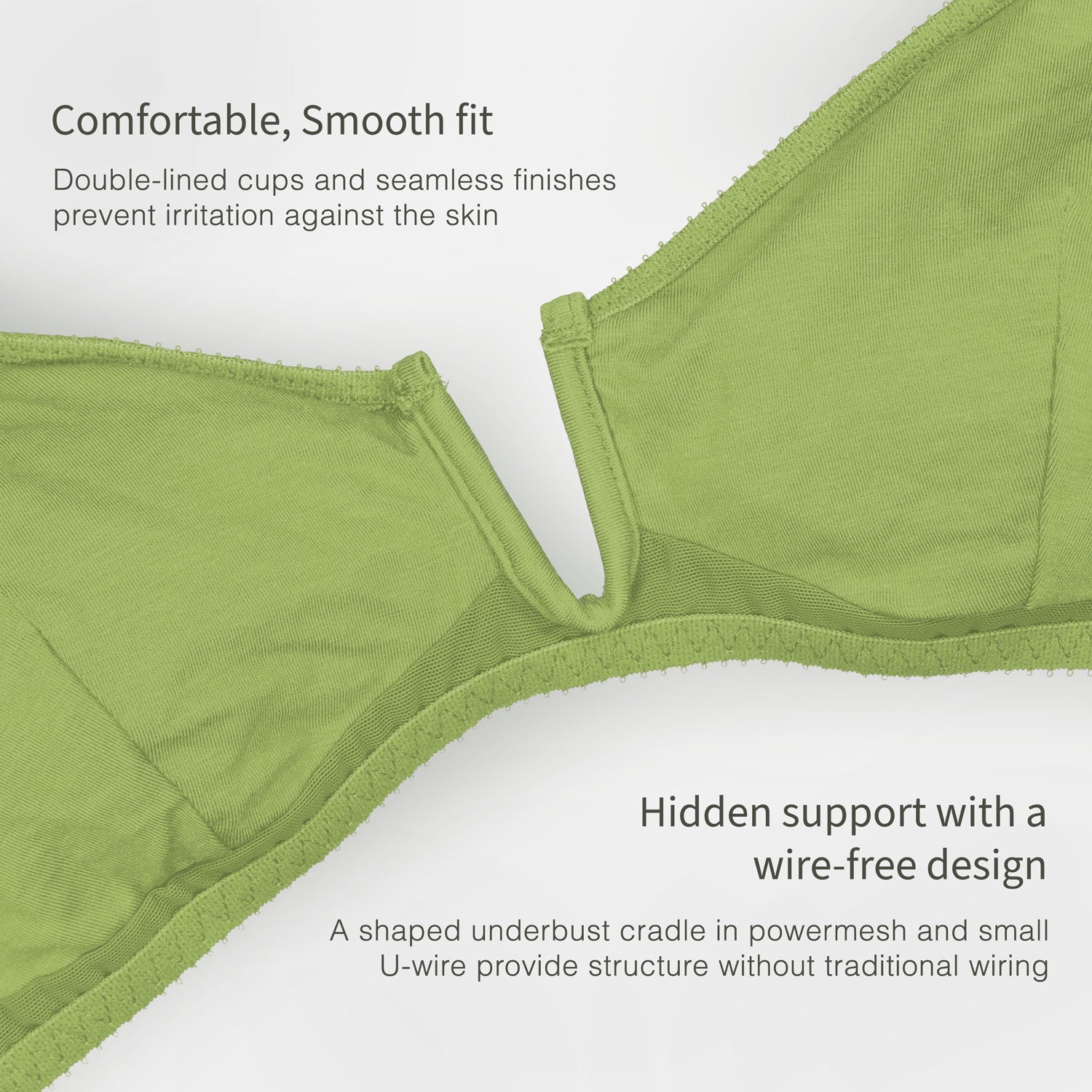
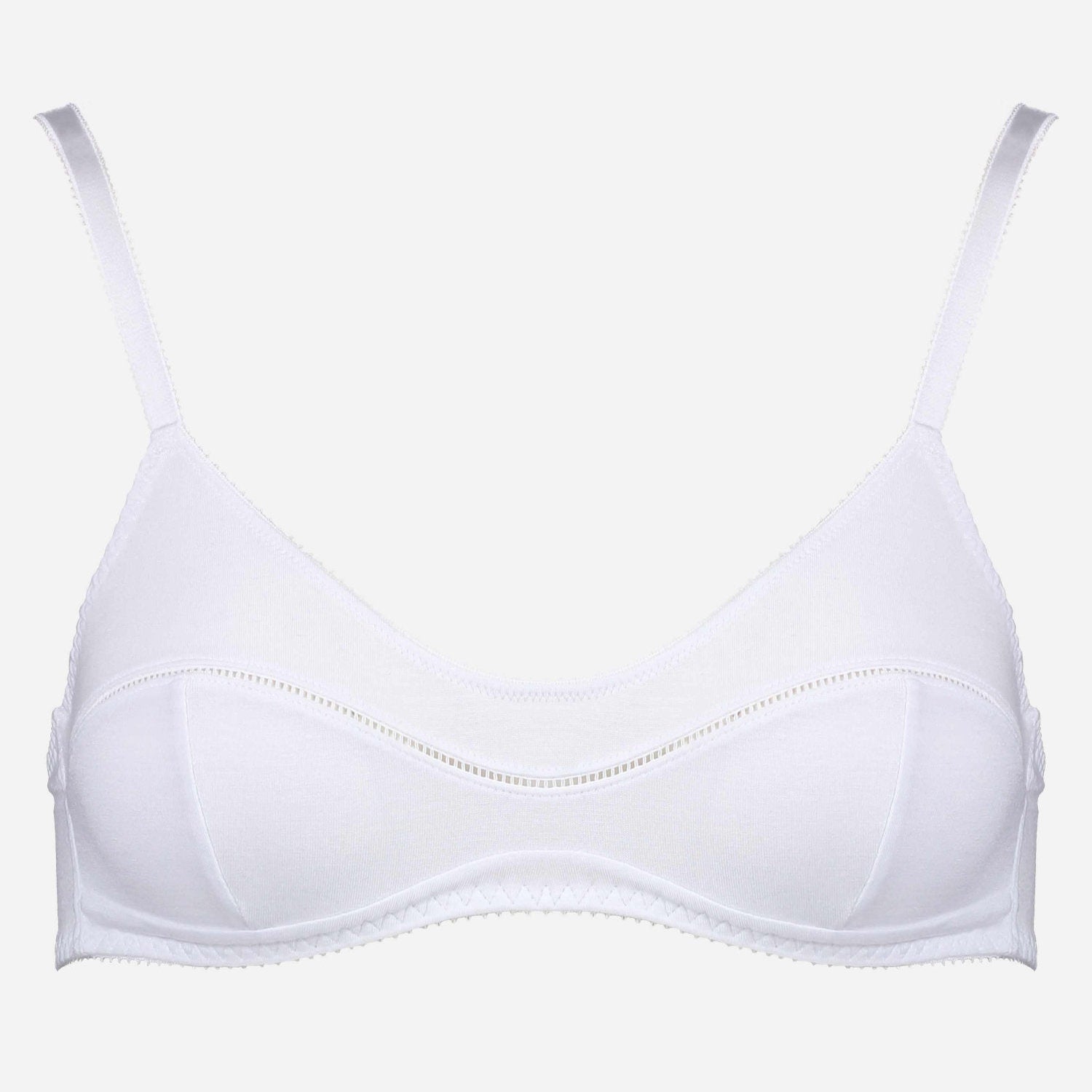
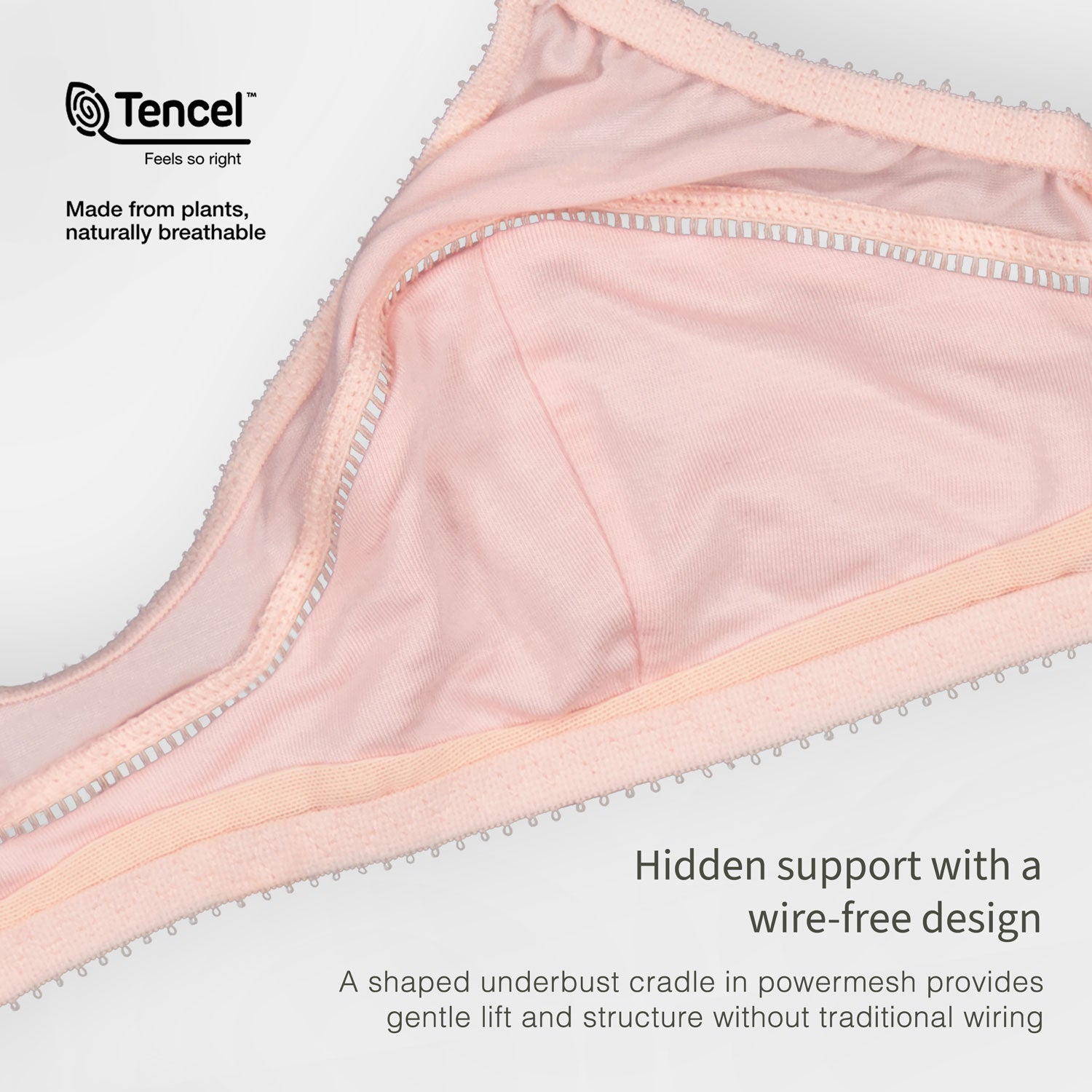
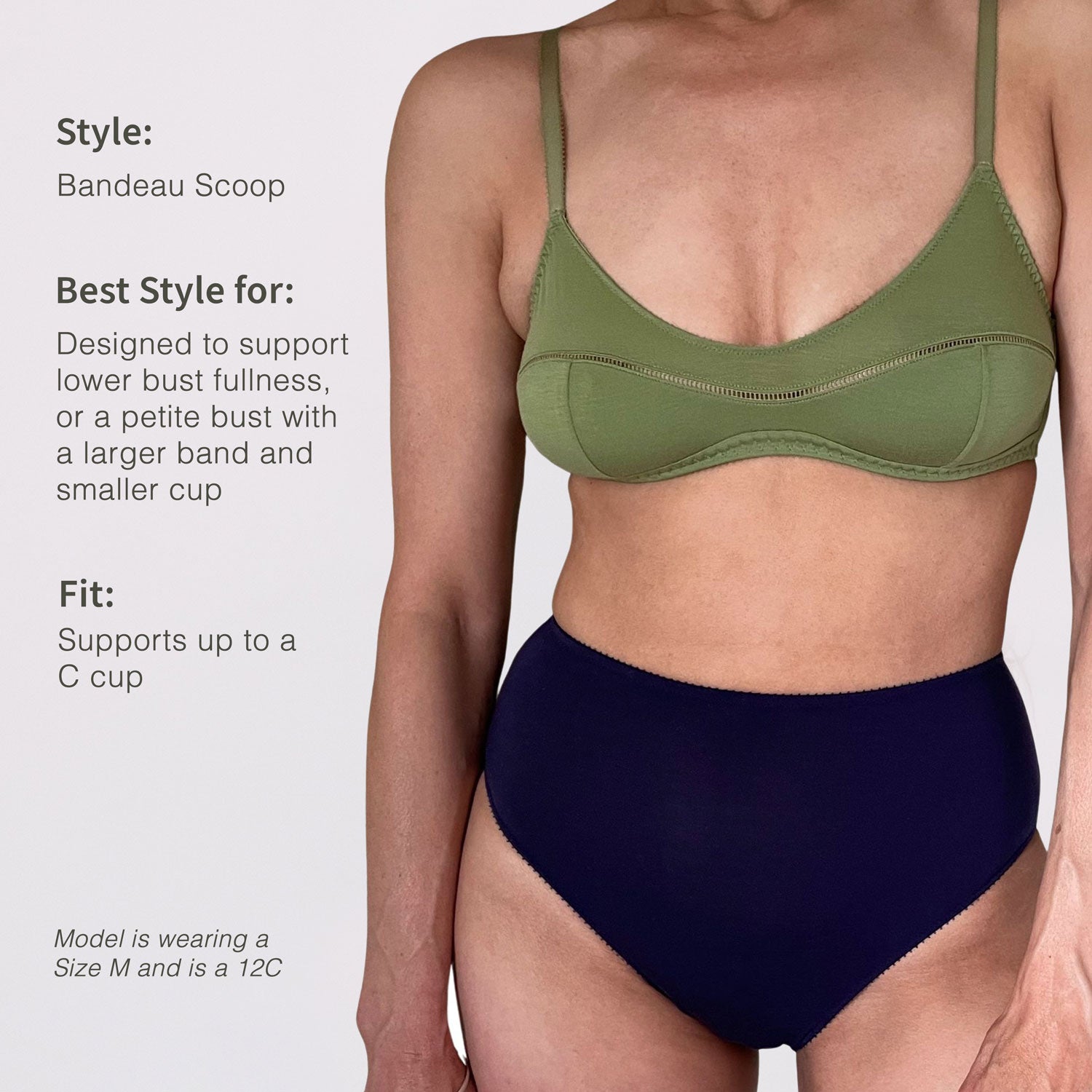
Wire-free does hold older breasts. It does it through the band, the cut, and the fabric, gentle pressure across a wider surface area, instead of lift from underneath. The structural support is real; it just looks different.
“I absolutely love this Rachel Bra. It has taken me a long time to find a bra that fits so well and is so comfortable. I have never worn underwire but because my breasts are slightly fuller it is hard to find a bra that has everything. I am 74 and finally I have a bra that for me is PERFECT.”
— Karen, 74, on the Rachel bra
What changes is the appearance. And that’s the part most women are quietly being asked to question. Breasts at 70 don’t sit where they sat at 30. They were never going to. That’s mostly what women come to us looking for.

So what works?
If you’ve tried wire-free before and given up, it was probably the wrong wire-free. Soft and shapeless. No real support. Pretty for an hour, frustrating by lunch.
That’s not what wire-free has to be.
A bra that works for a body that’s changing needs three things, designed to work together.
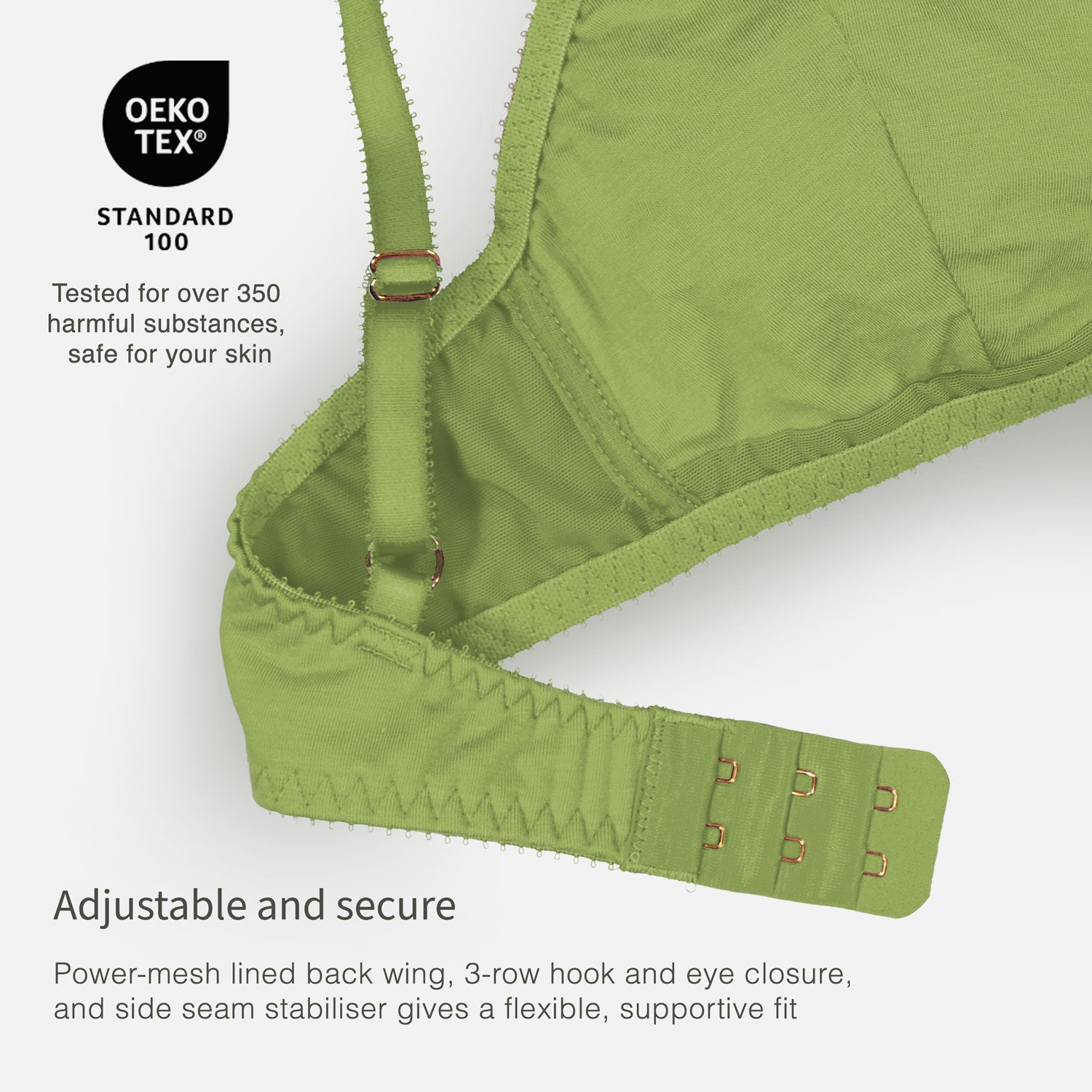
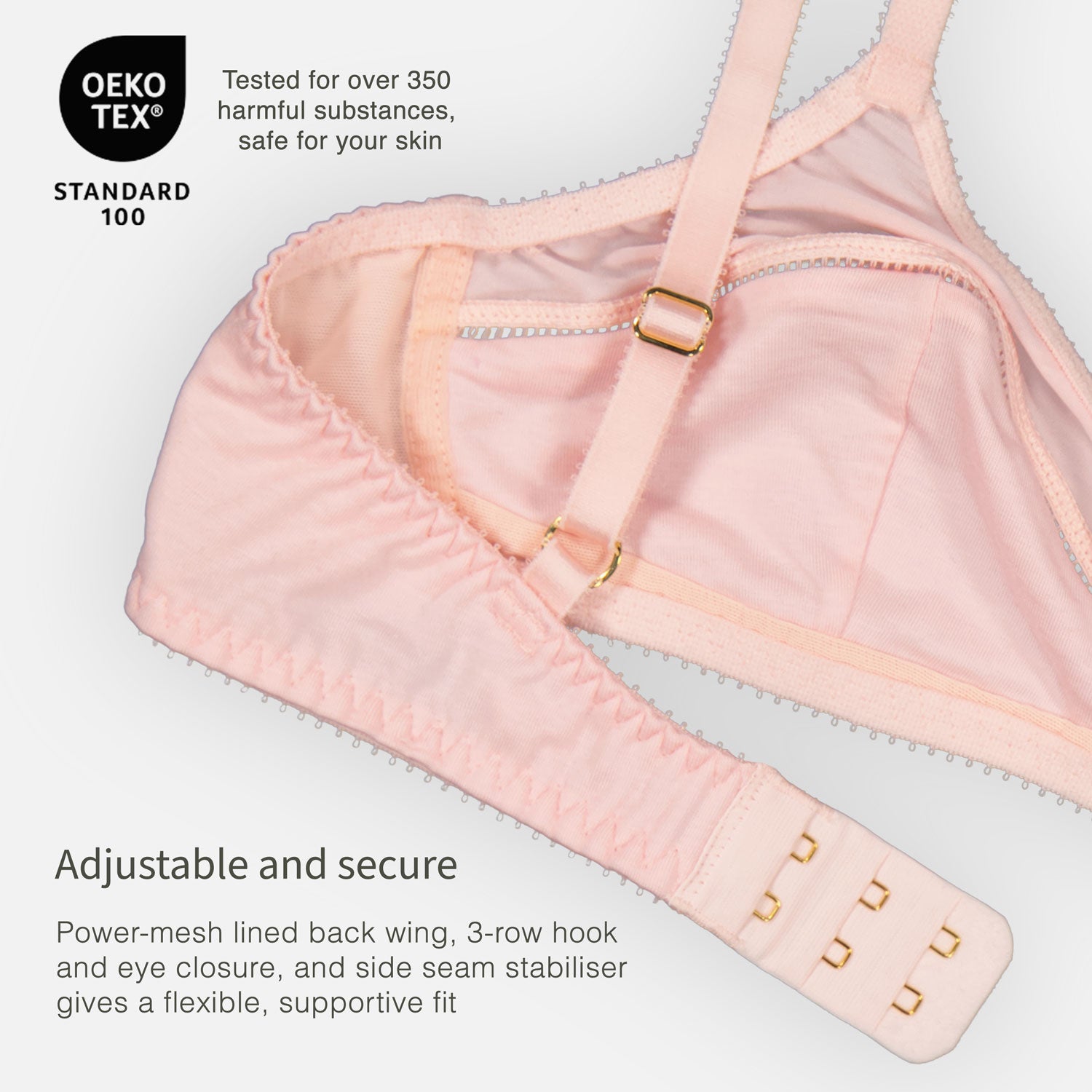
A band that does the structural work. Wider, softer, and engineered to sit flat across the ribcage, distributing weight evenly the way the body would on its own. Most fit problems come back to the band; getting it right resolves more than people expect.
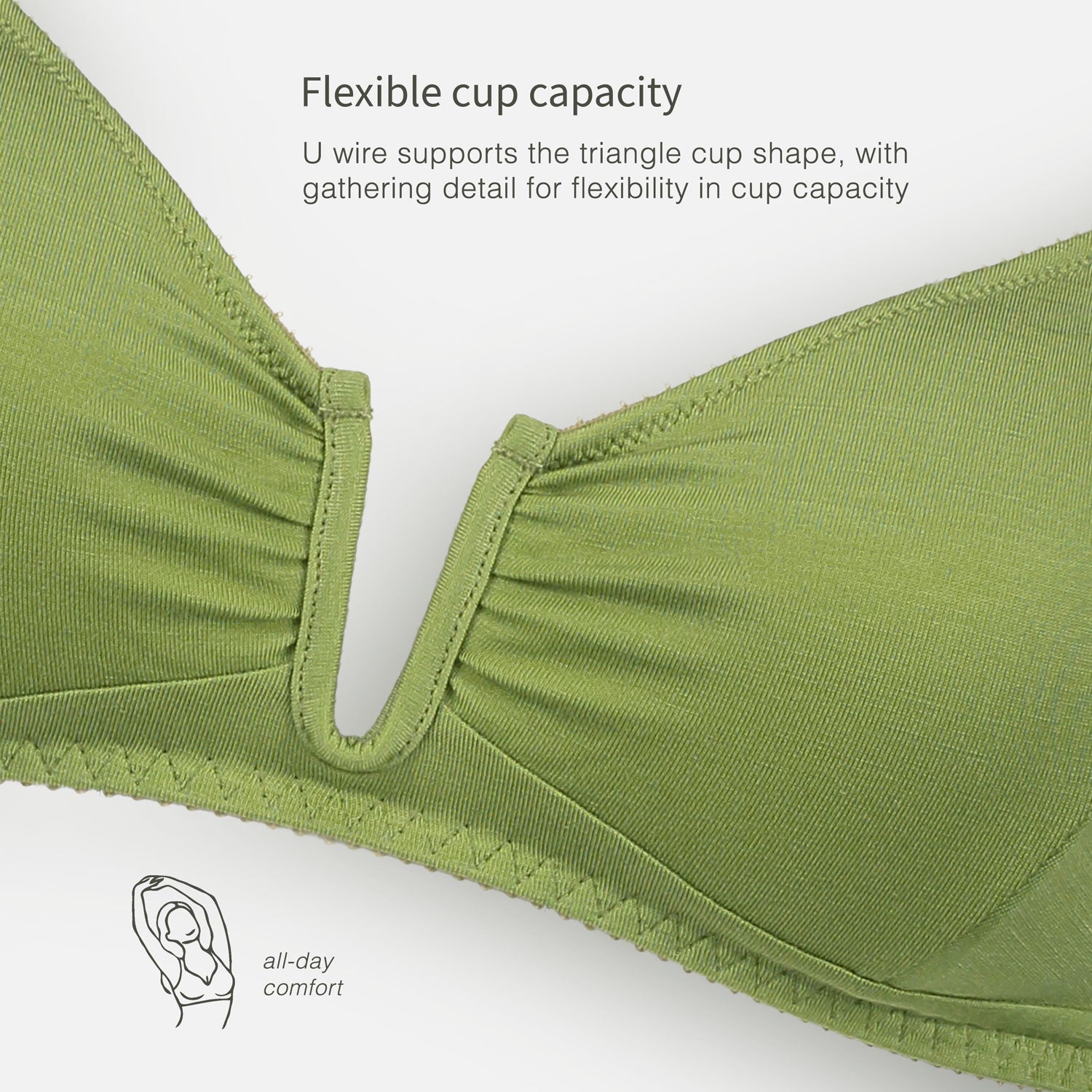
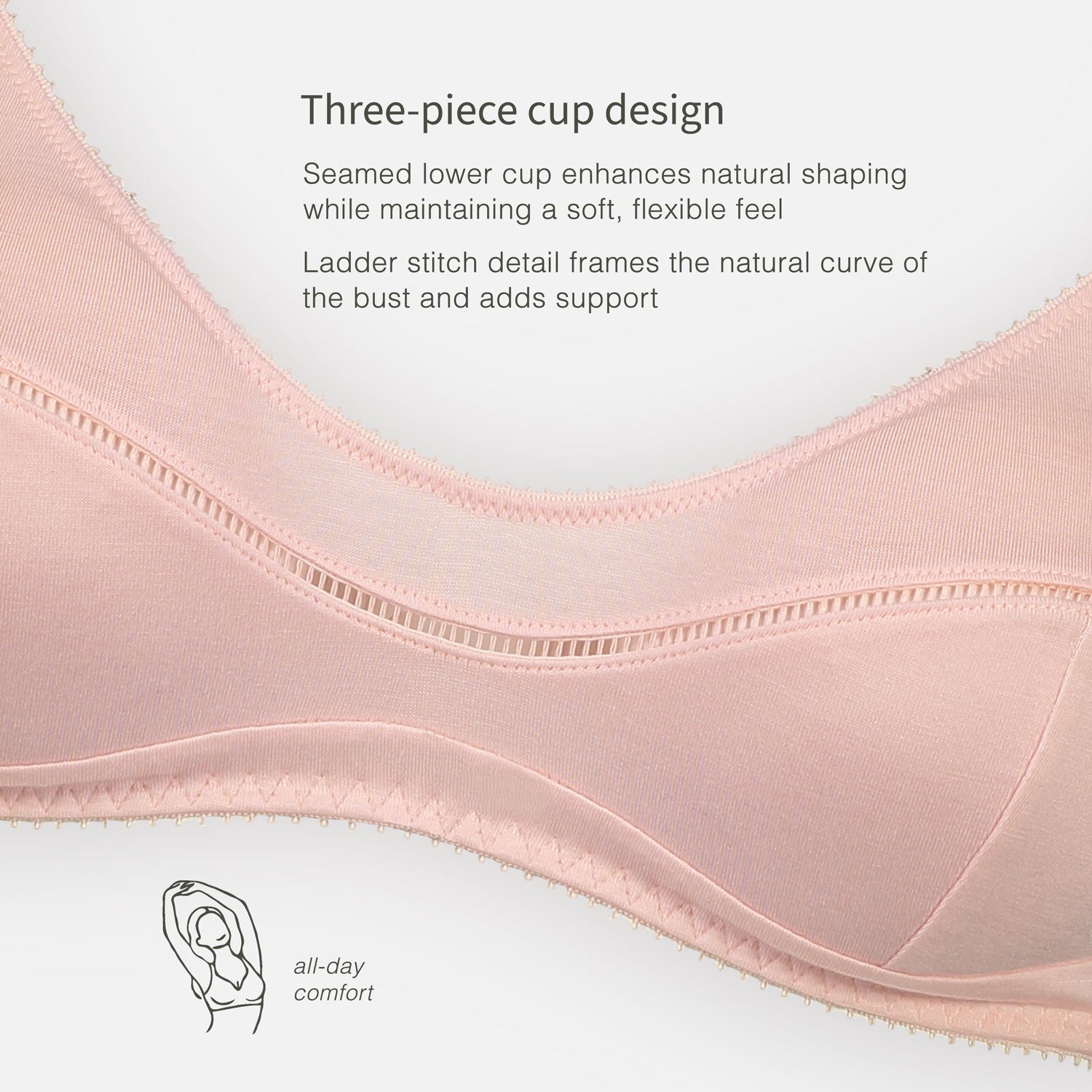
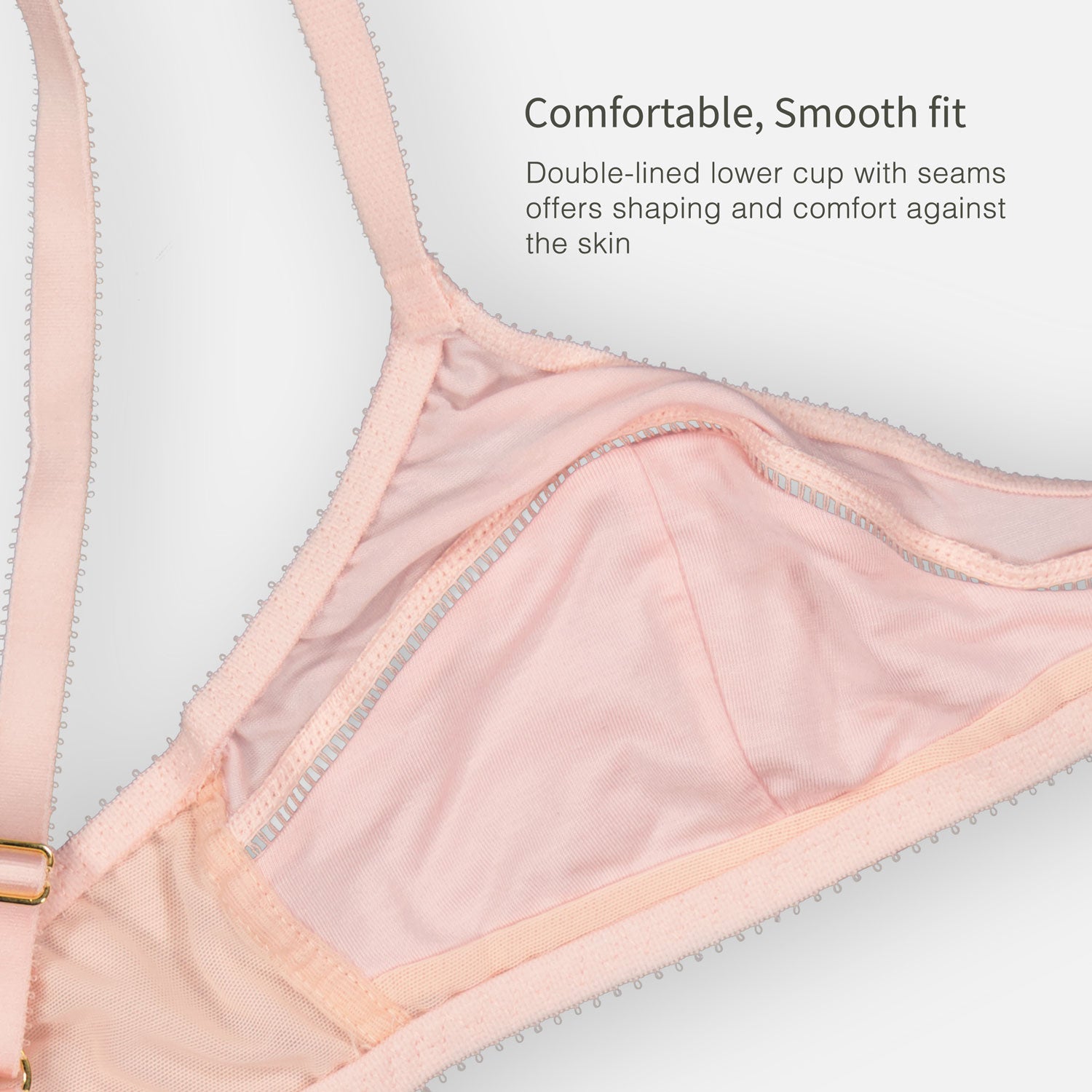
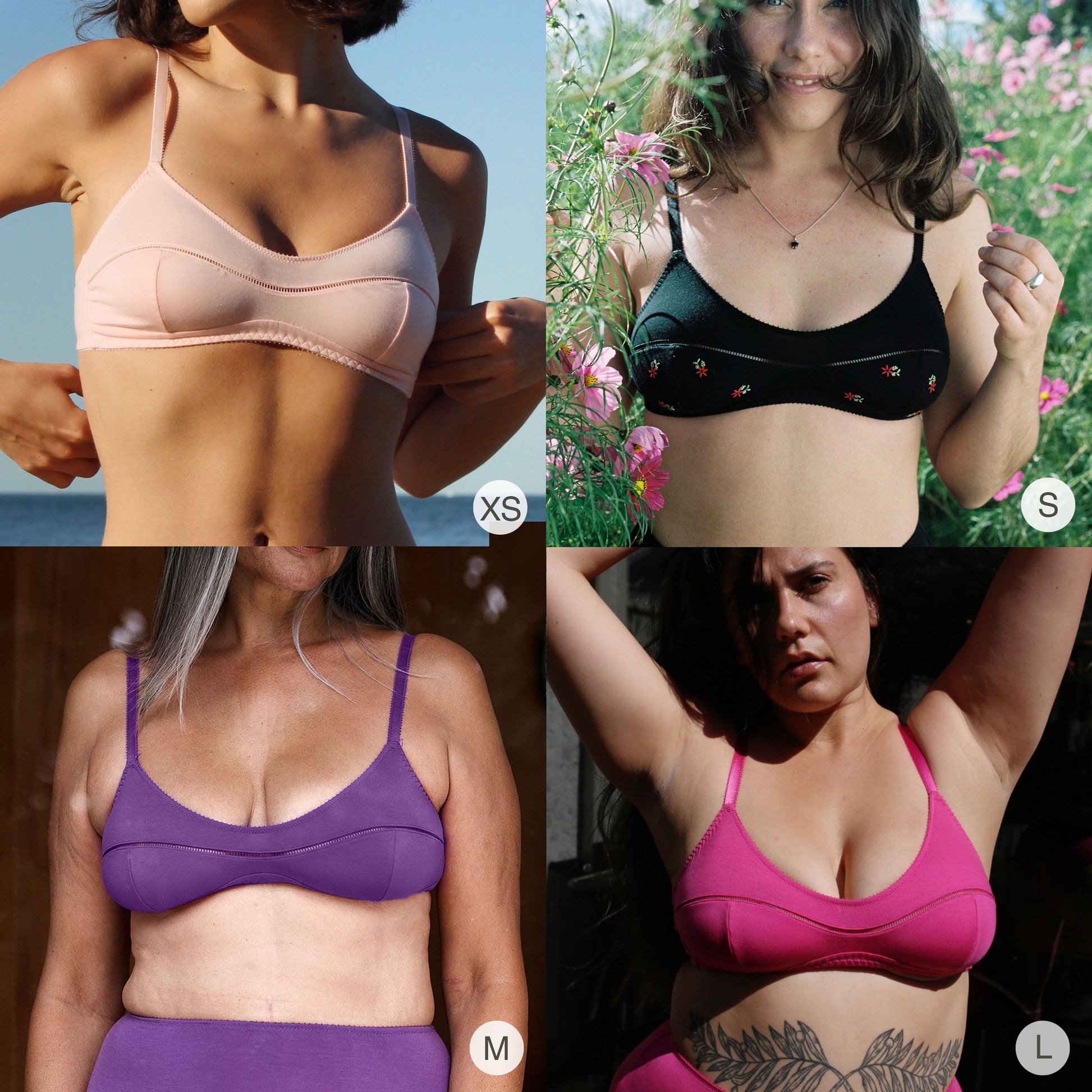
A cup engineered to flex. Most bras lock you into one cup size per band. Ours doesn’t, each cup is designed to accommodate a range of cup sizes within a single band, made from TENCEL™ fabric with elastane built in for stretch. So instead of needing a different bra every time your breasts shift in shape or volume, the same bra adapts. For a body that doesn’t stay the same week to week, season to season, year to year, that’s the whole point.
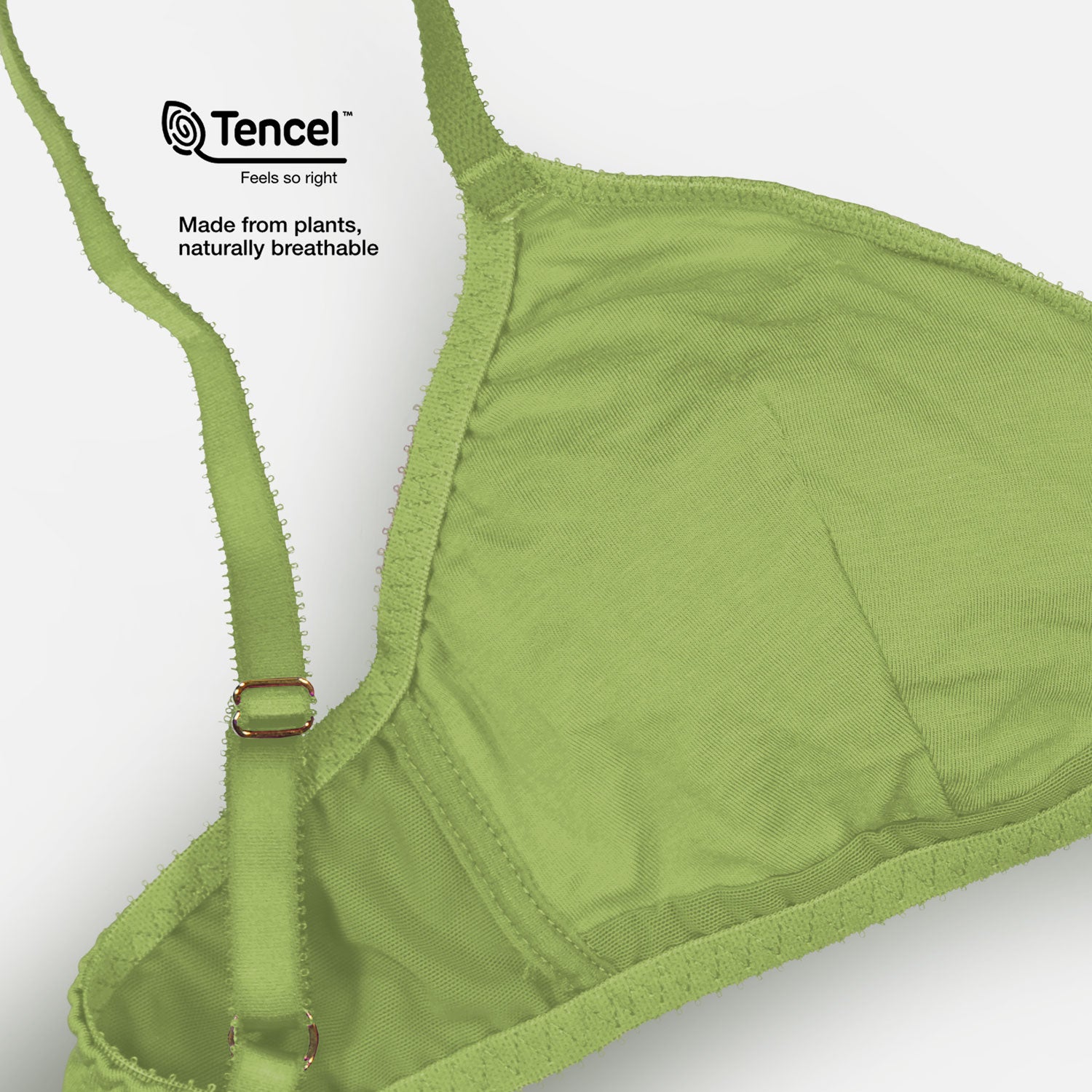
Fabric that breathes. The TENCEL™ we use against breast tissue is made from sustainably-sourced wood pulp and moves with skin instead of against it. Soft, breathable, and quietly more comfortable to live in than synthetic alternatives.
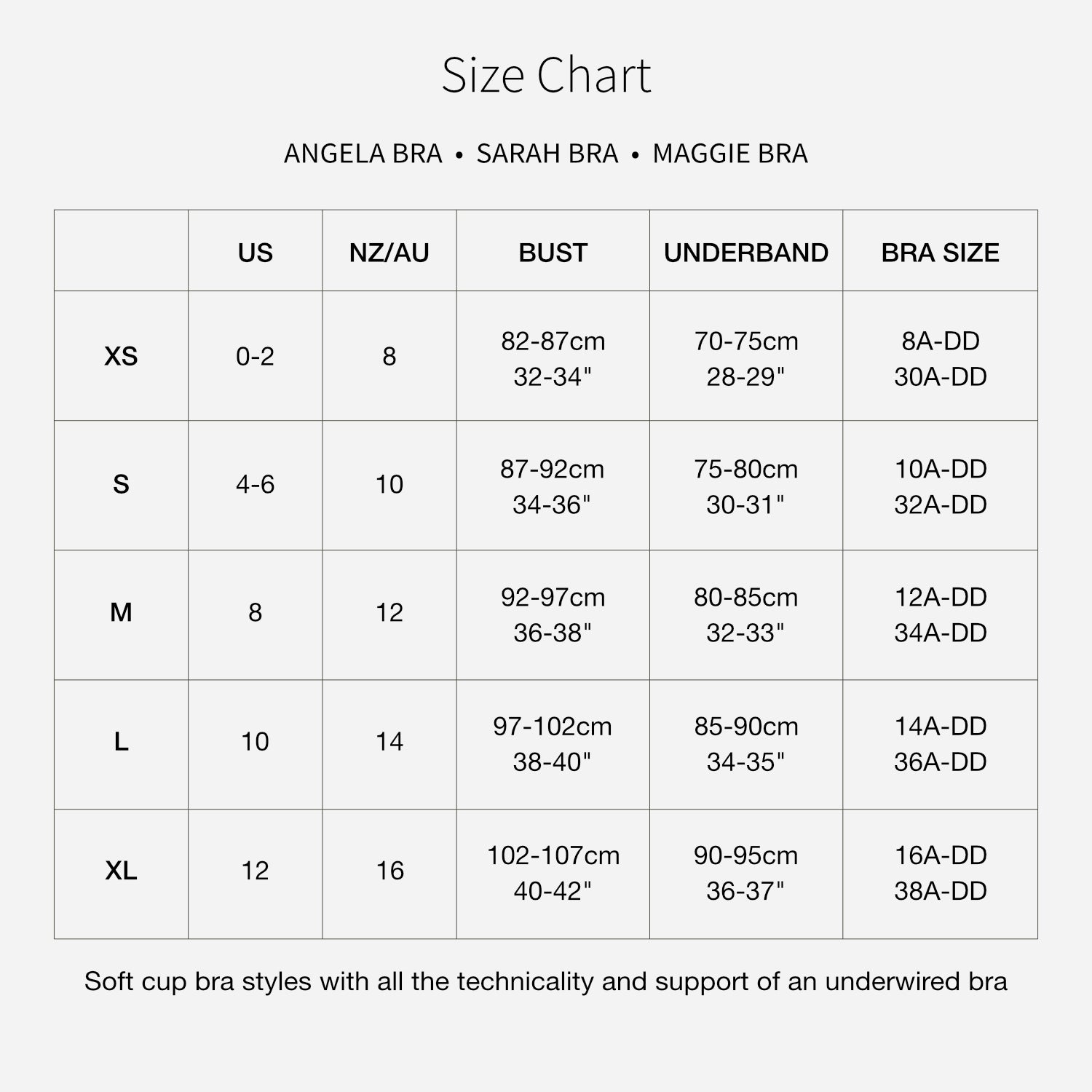
This is what Videris is built around. If you’re trying wire-free for the first time or trying it again after a version that didn’t work, start by re-measuring. The size you wore at 30 is probably not the size you need now. Most of the women who find us in this stage of life don’t go back.
The shift isn’t a loss
Most of the women we hear from in this part of life describe it as the first time in decades they’ve felt comfortable in a bra. Not because their body finally cooperated, but because they stopped trying to make it.