When was the last time you checked the label on your bra?
Not the size tag. The fabric composition label, the one tucked inside the band. Most of us have seen it. Glanced at the percentages and moved on. Because '80% polyamide, 20% elastane' doesn't read as plastic. It reads as fabric. It reads as the soft, wearable thing you chose because it looked and felt right.
The connection between that label and the same raw material that produces a plastic bottle isn't obvious and nothing in the labelling system asks you to make it.
We've been making changes in other parts of our lives: plastic bottles swapped for stainless steel, even if there's still a plastic seal on the lid, or a silicone straw. Glass containers in the fridge still have plastic lids. That's what conscious reduction actually looks like: not a clean break, but a series of considered choices about where it matters most.
The fabric pressed against your breast tissue for many hours a day is worth being one of those choices.
Once you look, it's difficult to un-know.
Most bras are made from the same thing as a plastic bottle
The fabrics most commonly used in lingerie - nylon, polyester, elastane, microfibre, power mesh - are all derived from petroleum. The same raw material that produces plastic packaging and single-use bottles is processed and spun into the cups, linings, lace, and mesh of the bras sitting in your drawer right now.
This isn't a fringe fact or alarmist claim. It's basic materials science, and the reason it's so little discussed is that the lingerie industry, like most of fast fashion, is built entirely on petrochemical infrastructure. Synthetic fabrics are cheap to produce, easy to mould into shapes, and highly resistant to wear. They do the job. The question is whether "doing the job" is the only question worth asking.

Why breast tissue in particular deserves your attention
The breast tissue isn't inert. It's part of the body's lymphatic system, it absorbs, processes, and responds to its environment. A synthetic fabric that doesn't breathe against it all day can create a different kind of environment, less airflow, less movement, more containment. It's not the same as wire pressure, but it's still worth paying attention to.
Miria Aman, an Auckland-based lymphatic massage specialist who works specifically with breast tissue, talks about what underwire does to the tissue over time, the "pizza crust" effect of chronic wire pressure on the lymphatic tissue around the breast. That's a separate conversation from materials which you can read more about here, but it points to the same underlying question: What is a bra doing to the tissue it's in contact with, all day, every day?
The label tells you what it is. Not what it took to make it.
In skincare, food, and cleaning products, manufacturers are required to list every ingredient, every ingredient or chemical that went into making the product. In fashion and apparel, the law only requires disclosure of the final fabric composition. '80% polyester' on a label tells you what the fabric is. It tells you nothing about the chemicals used to turn crude oil into that polyester, or the dyes, fixatives, and processing agents applied along the way.
Think about how you read a food label. If the ingredients list contains things you can't pronounce or don't recognise, you might choose to put it back. Not because we've done a chemistry degree, but because the list itself is a signal, and instinct kicks in from there. Clothing doesn't require that list. The equivalent for your bra - every processing chemical, dye, fixative, and solvent used to turn raw materials into that fabric - doesn't have to be disclosed. The instinct that would normally guide you never gets the information it needs to work.
Where the label sits isn't the whole picture
Most bra labels will tell you the fabric breakdown: 80% polyamide, 20% elastane, and so on. What they won't tell you is where that fabric lives in the garment. And position is everything. A synthetic back liner behaves differently from a synthetic cup lining that sits against skin all day. The question to ask is not just 'what is this made of?' but 'what part of this bra touches my breast tissue directly?'

No bra is fully plastic-free
Elastic is synthetic, there's no credible natural alternative that performs across many washes and powermesh gives support to areas of stress.
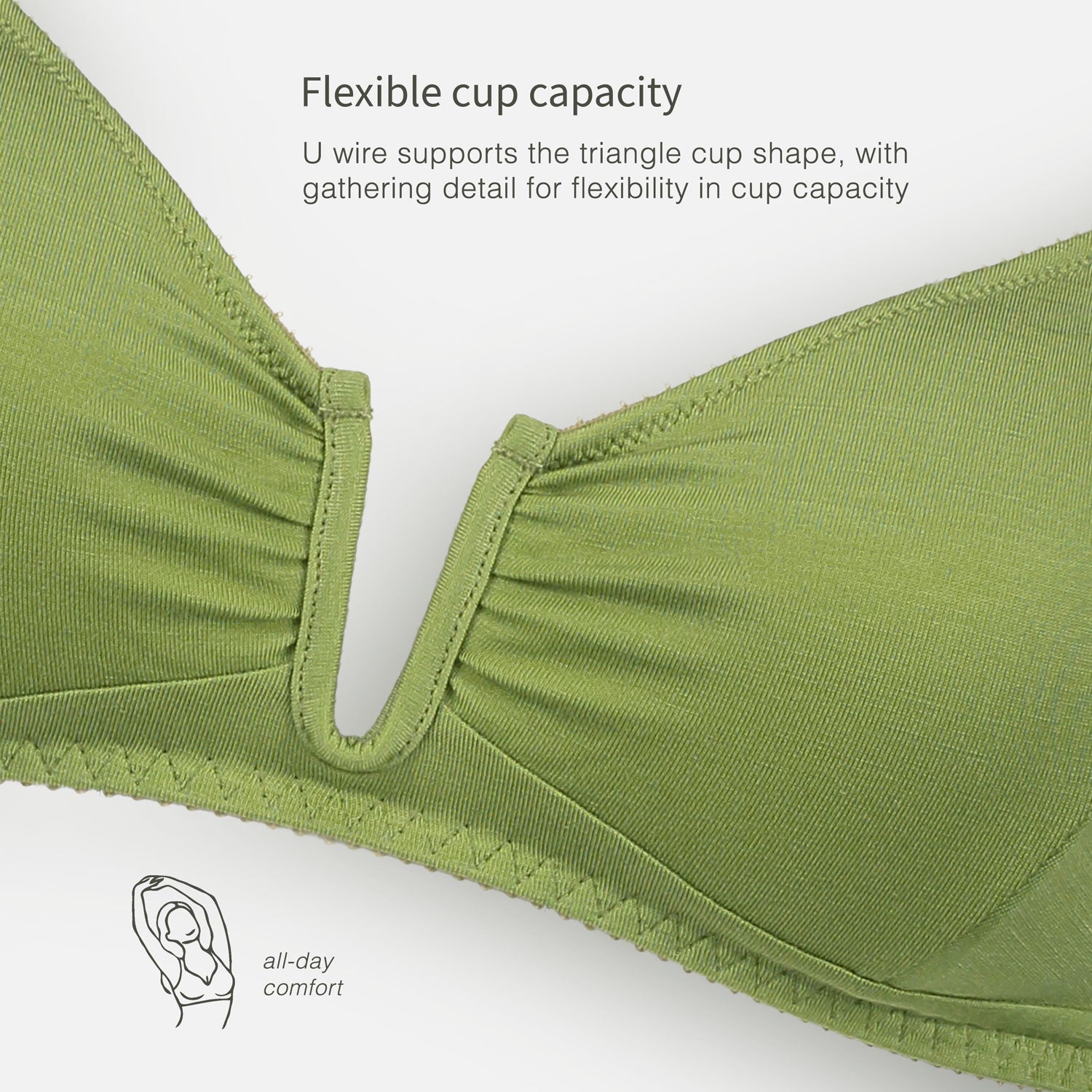
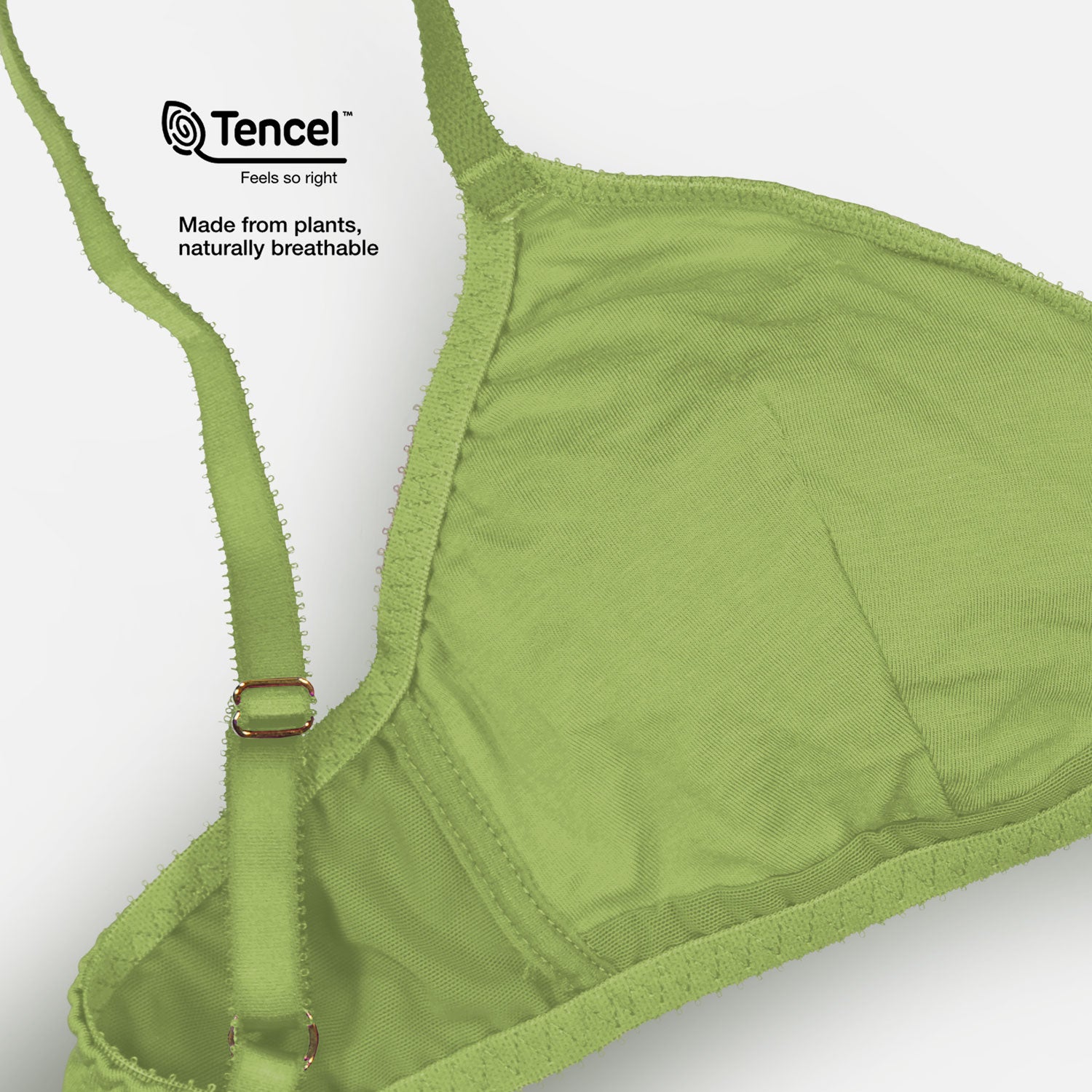
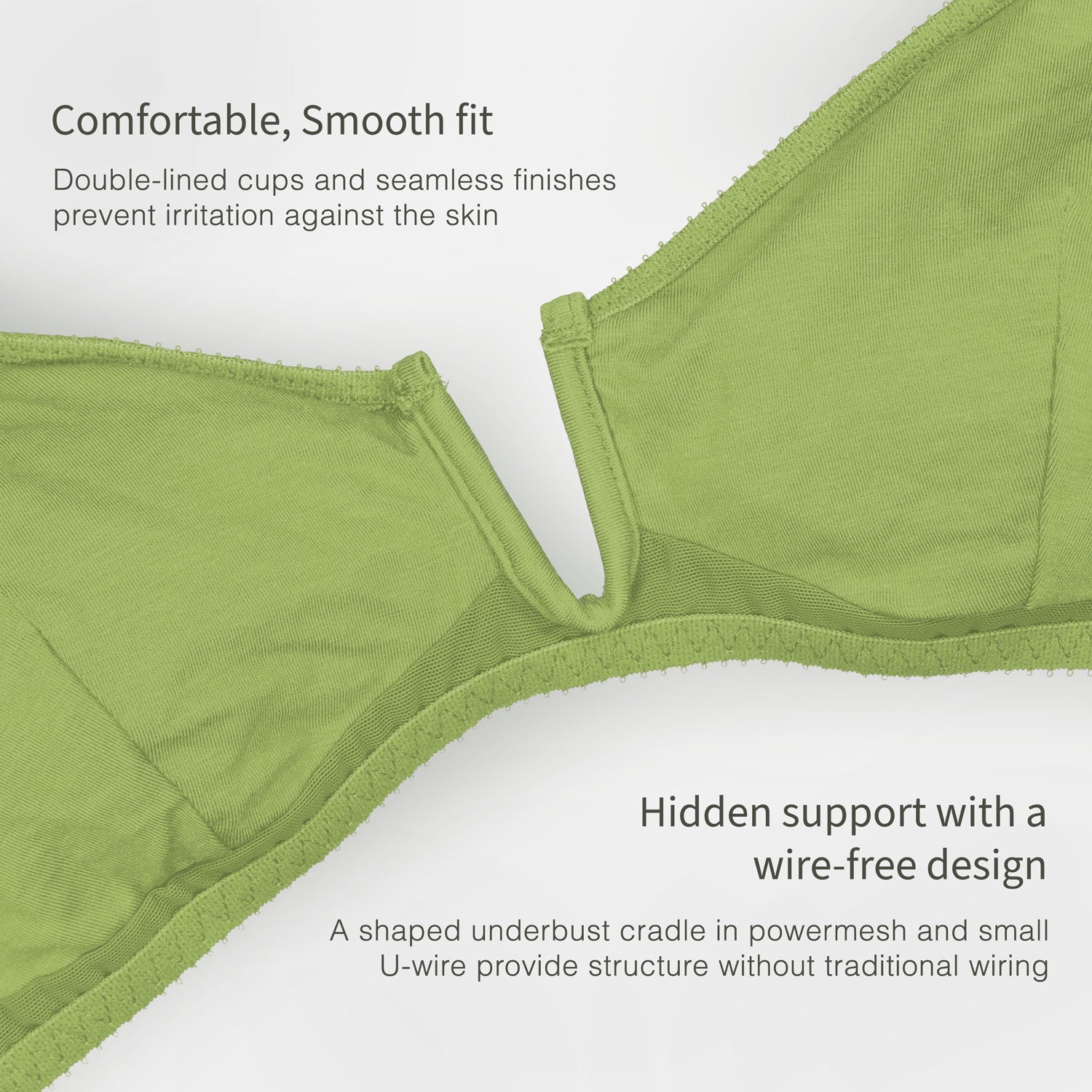
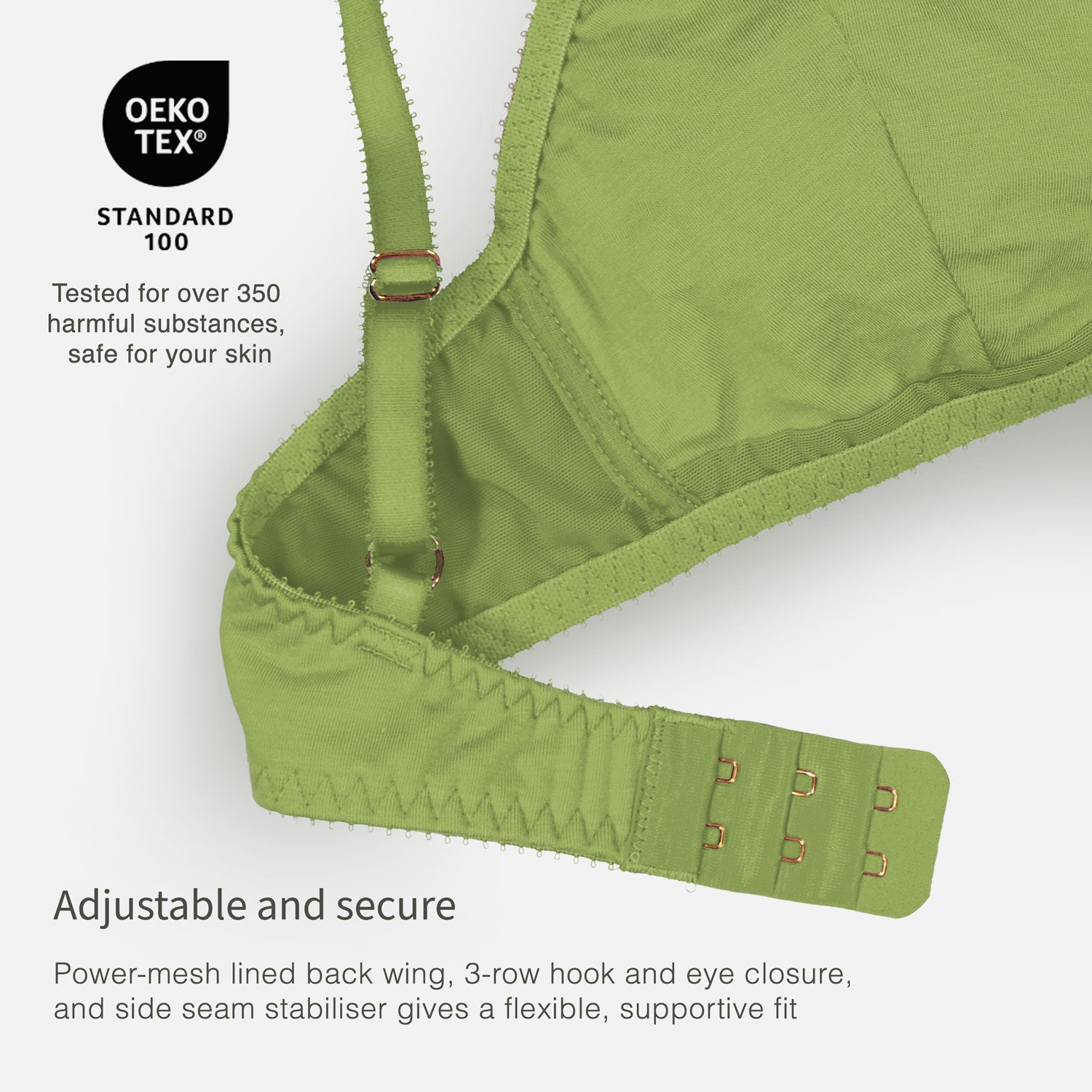
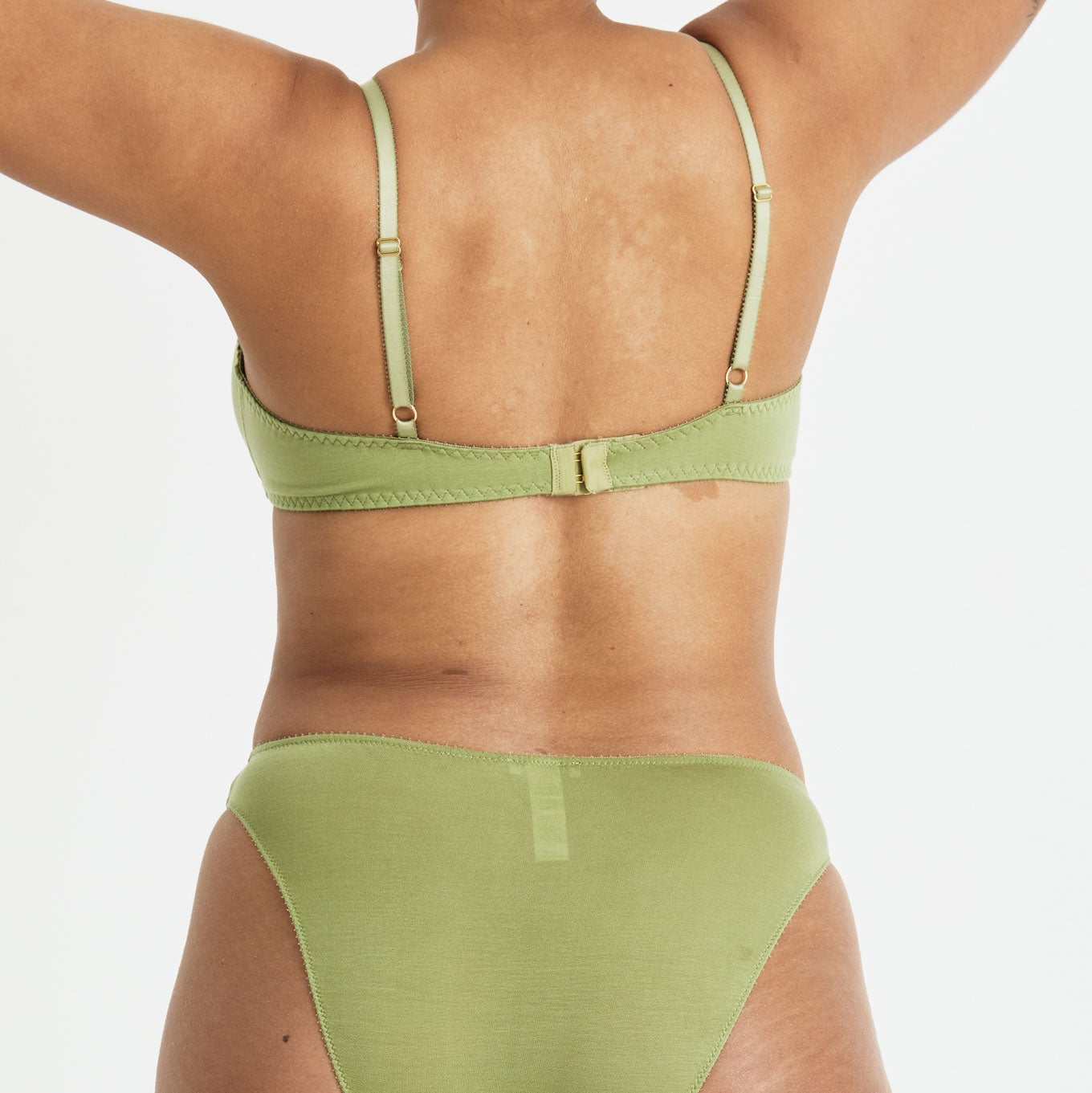
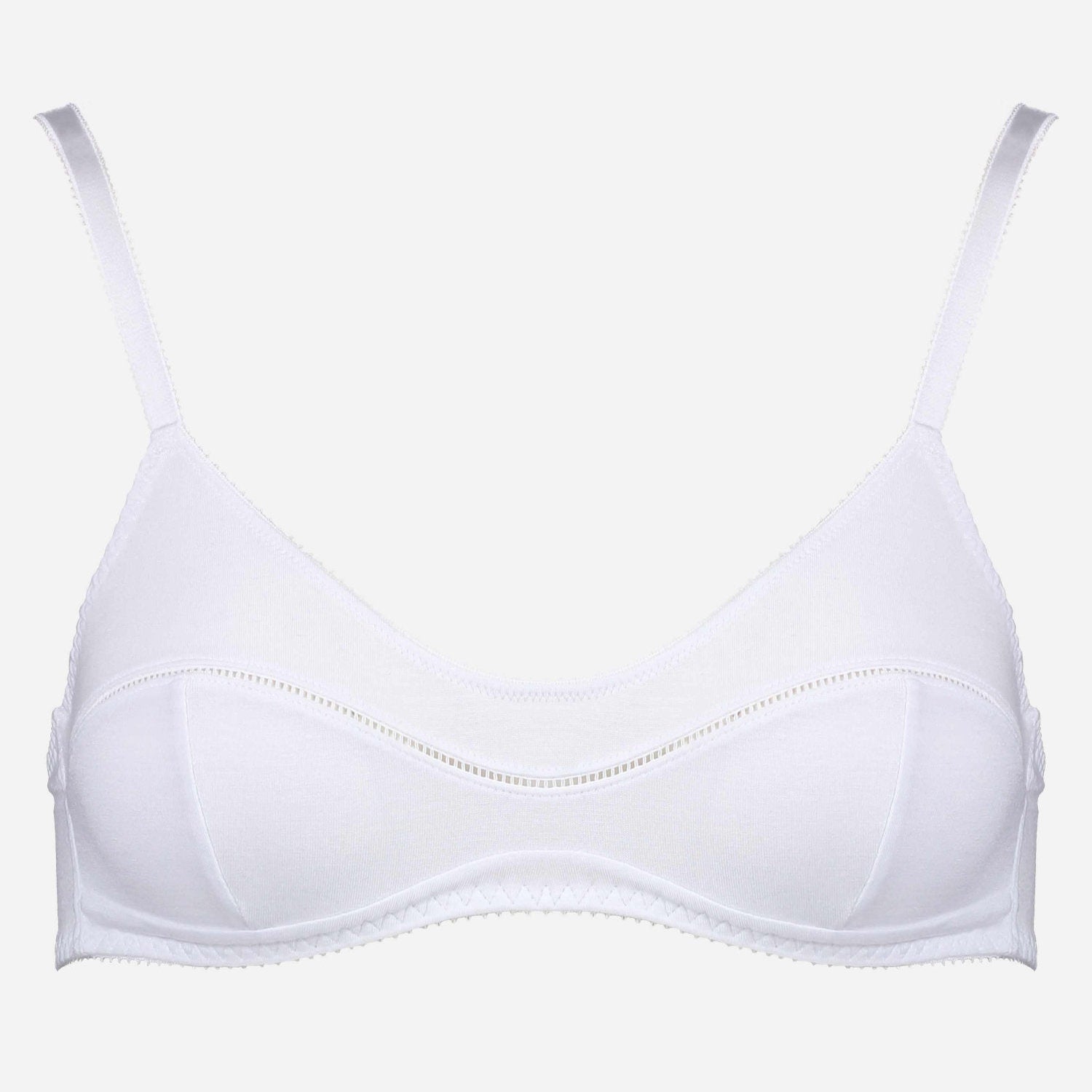
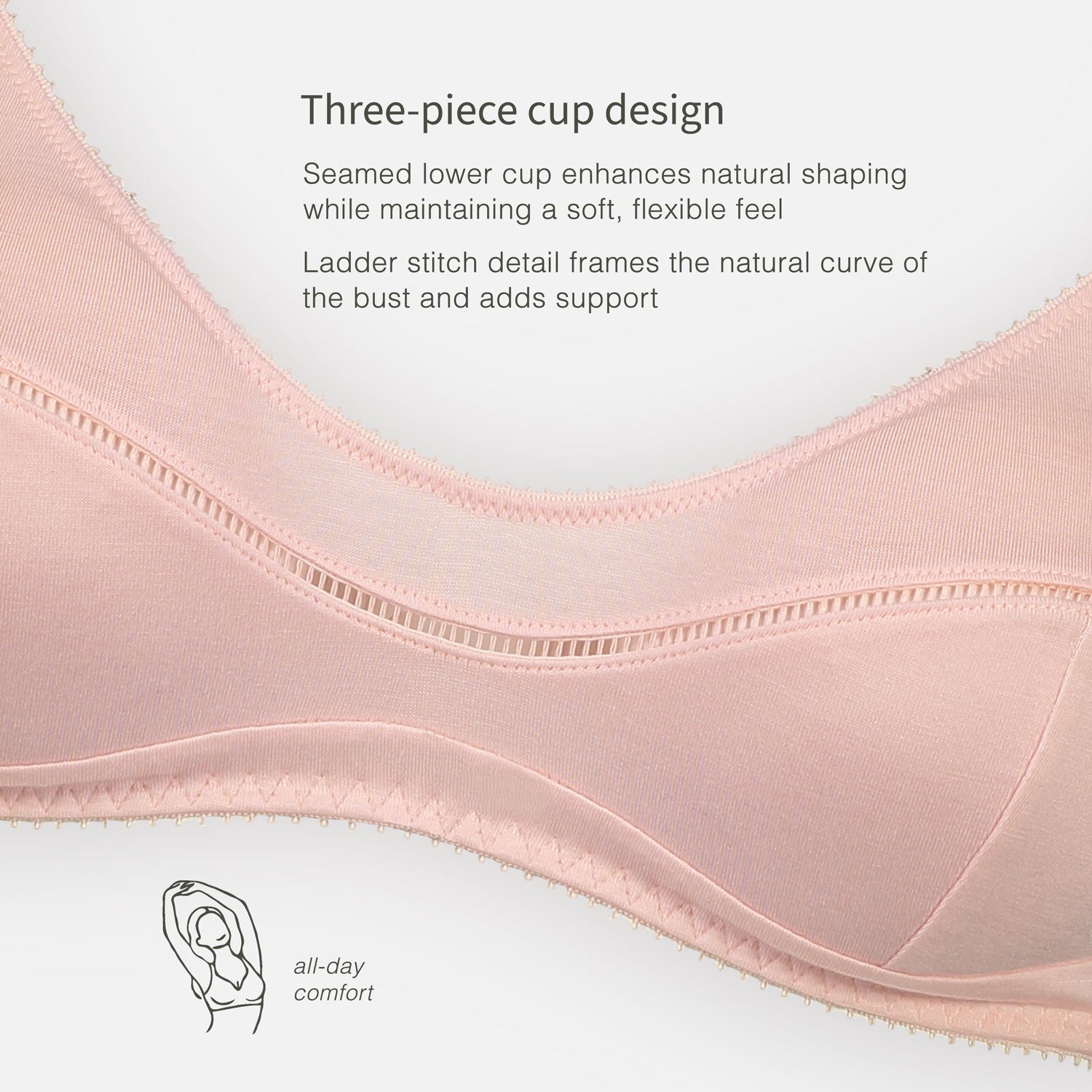
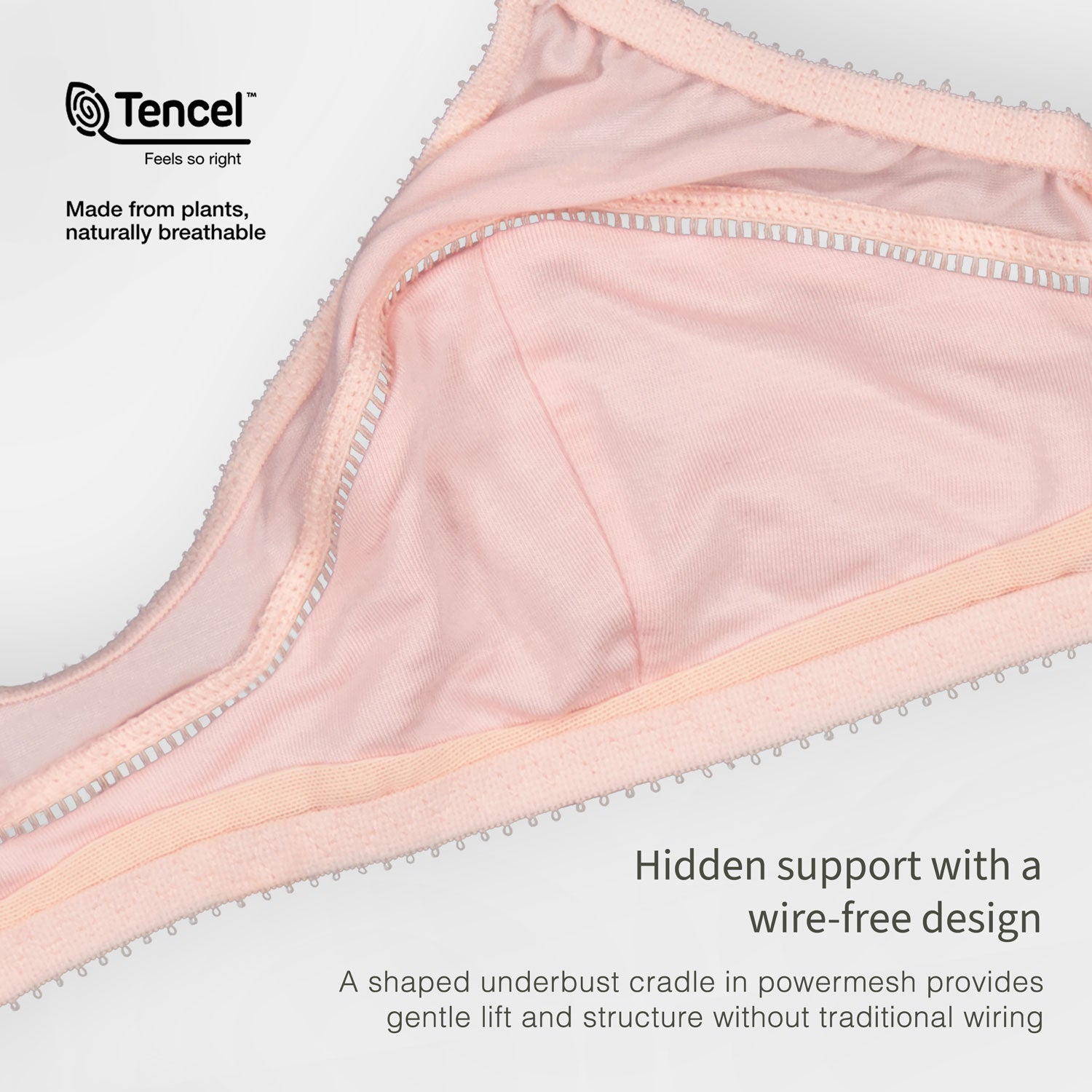
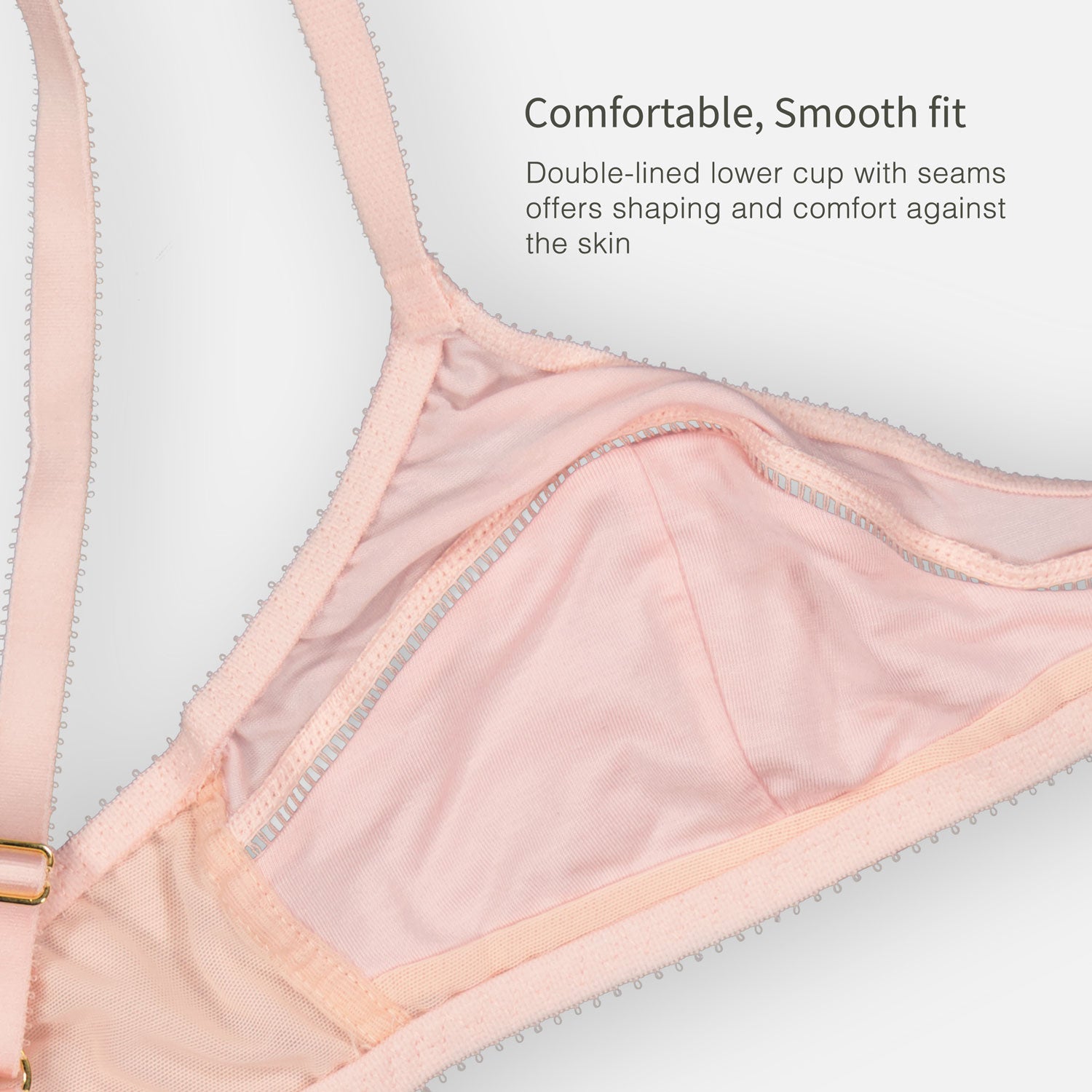
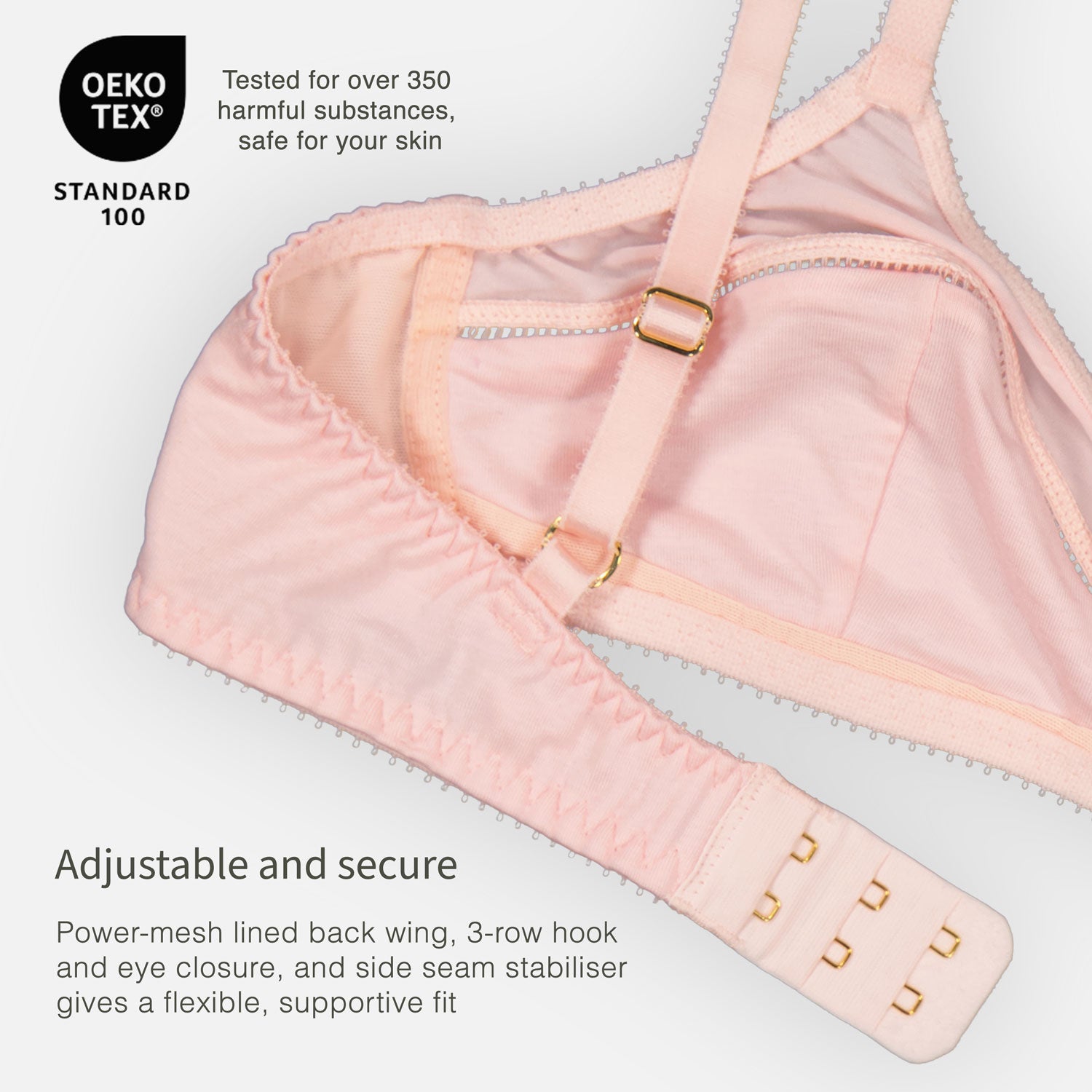
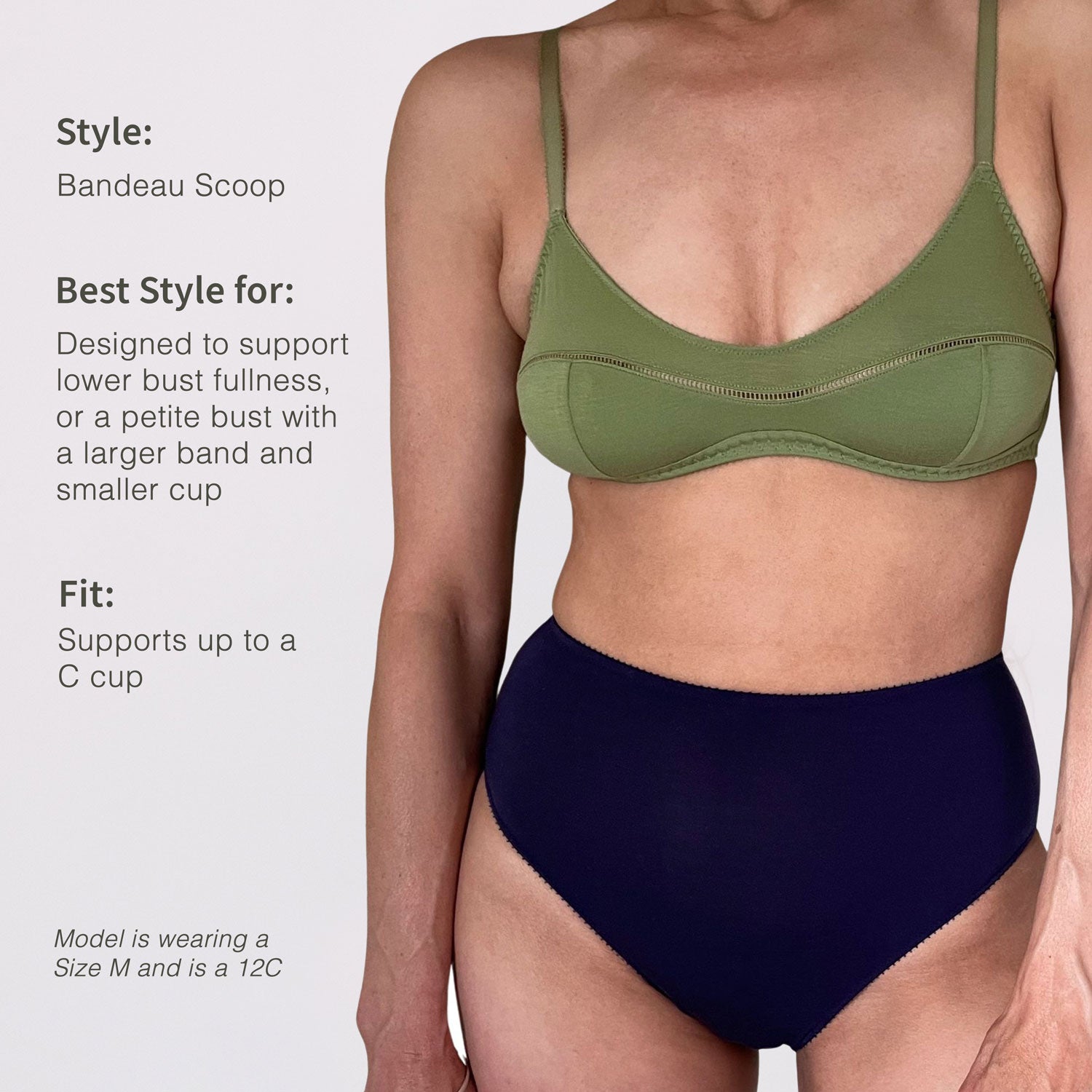
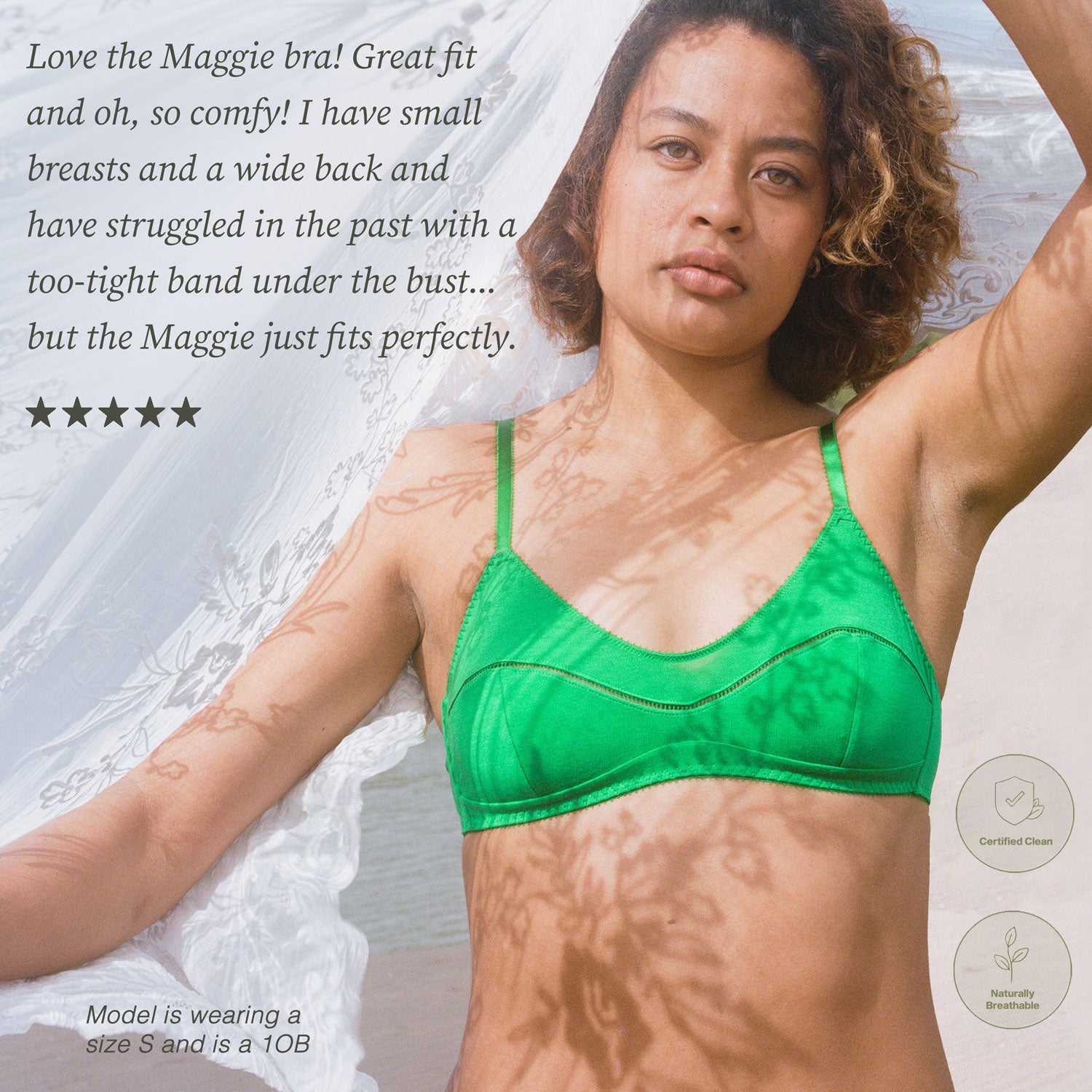
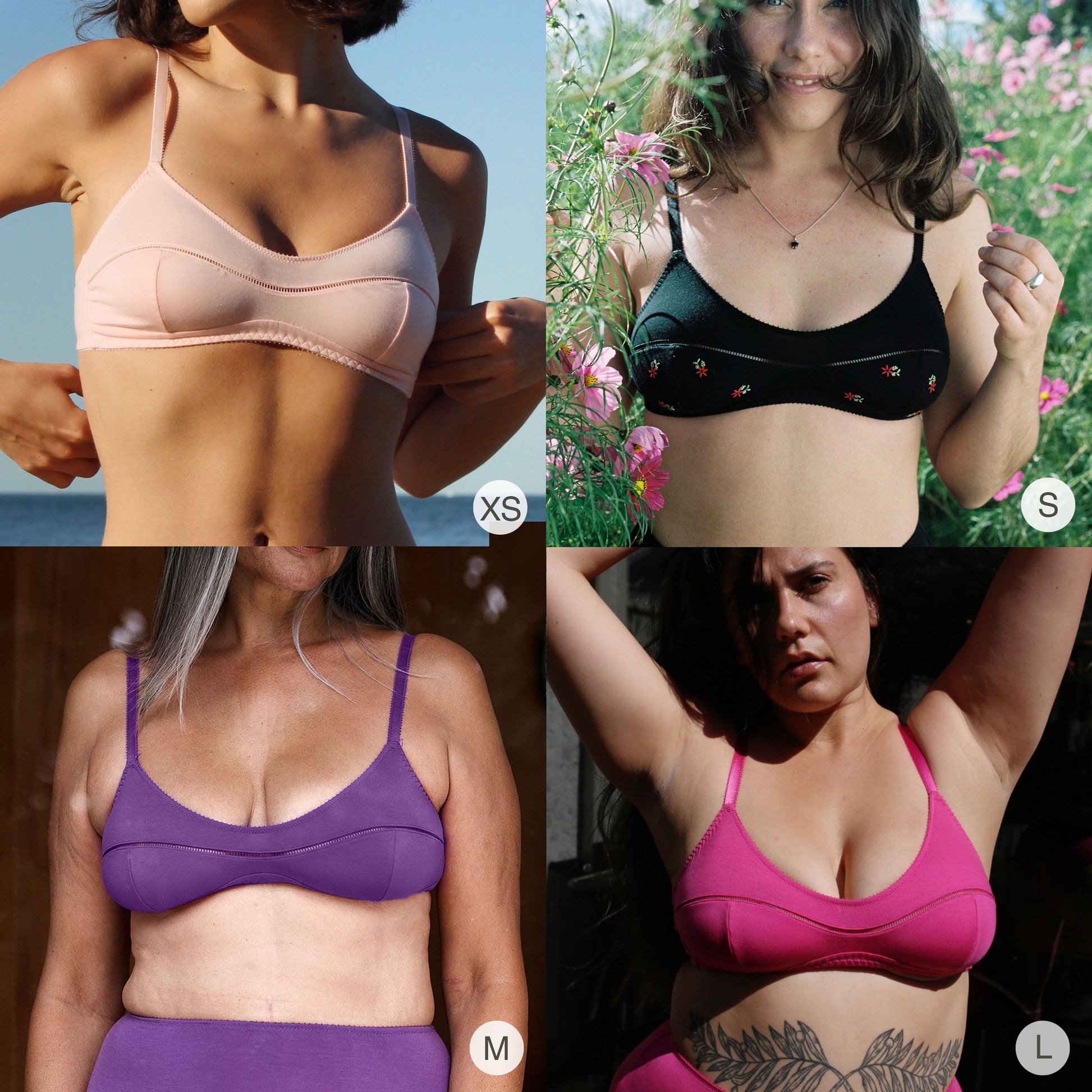
At Videris, every fabric we use is certified to OEKO-TEX® STANDARD 100, a globally recognised standard that tests against over 1,000 harmful substances, with stricter requirements for direct-skin-contact items like underwear than for outerwear. The cups and interior lining - the fabric that touches breast tissue directly - are TENCEL™, a fibre made from sustainably sourced wood pulp in a closed-loop process that recovers and reuses water and solvents. The underbust and back wing have a powermesh lining for support and longevity. Our knickers, aside from the elastics, are made entirely from natural, breathable TENCEL™.
That's not perfection. It's an intentional set of choices, made to reduce the amount of plastic our body comes into contact with.
The swap from plastic bottle to stainless didn't happen because we had perfect information. It happened because we started asking a different question: what's close to my body, and does it need to be this? The bra is worth that same question.