For most of us, bras arrive early in life and quietly stay with us. We’re taught how they should fit, what they should look like, and what they’re meant to do, but rarely why they’re designed the way they are, or how they interact with the body wearing them.
I spent years inside the lingerie industry working with underwires, moulded cups and rigid structures - all the things we’re told a “good” bra needs. At the same time, I was making conscious choices elsewhere, choosing breathable fabrics for my clothing, while my lingerie drawer remained almost entirely polyester.
During pregnancy, I wore a wire-free bra for the first time. When I later tried to return to underwire, the constriction felt strangely foreign, like my body no longer recognised it.
That moment stayed with me.

Bras haven’t evolved as much as we think
The modern bra evolved in the late 1800s as a response to the corset, essentially by cutting it in half. At the time, it represented freedom. Women could move more easily, breathe more fully, and participate in daily life with fewer physical restrictions.
But while fabrics and aesthetics have changed over the decades, many of the foundational ideas behind bra design have remained the same: control, shaping, holding the body still.
We’ve simply normalised those sensations.
The body isn’t static but bras often are
Our bodies shift constantly. Throughout the day. Across our menstrual cycle. Through pregnancy, postpartum, perimenopause and menopause.
Yet many bras are designed as if the body is fixed.
Rigid structures don’t adapt well to fluctuation. This is why a bra can technically “fit” and still feel uncomfortable once you start moving, breathing, or simply living in it. The issue isn’t necessarily sizing, it’s design philosophy.
Support has traditionally been equated with tightness. Pressure. Stillness. But the body doesn’t experience support that way.

How breasts move and why it matters
Breasts aren’t passive. They’re made up of sensitive tissue, glands and lymphatic pathways. Unlike the circulatory system, the lymphatic system relies on movement rather than a pump to function.
When something sits tightly around or against the chest for long periods, it’s not unreasonable to consider how that pressure feels over time. Many women describe a sense of relief when they remove restriction, less tension, more ease, deeper breathing.
That feedback matters. It’s about awareness. Listening to the body’s responses rather than dismissing them as normal or unavoidable.
What’s touching your skin matters
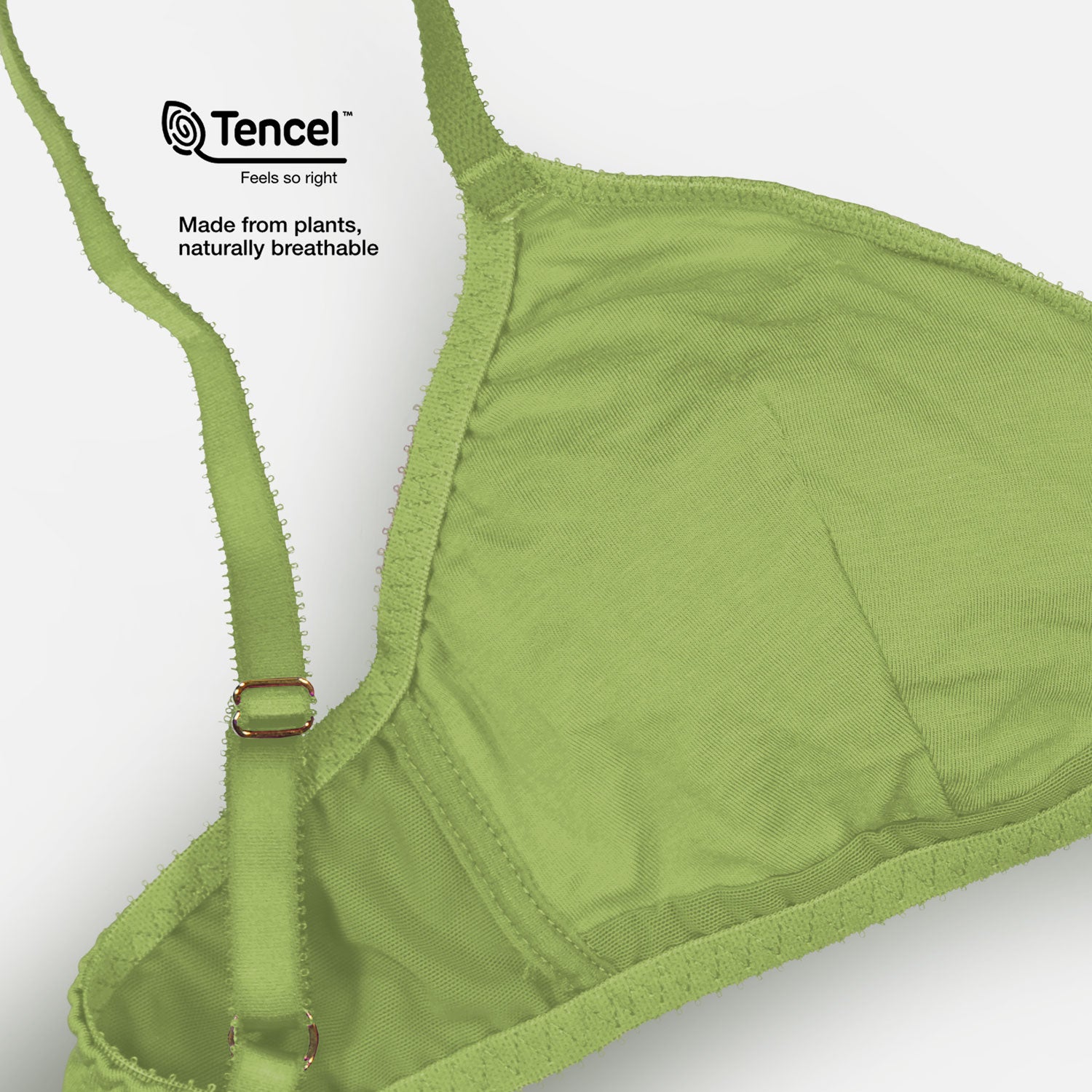
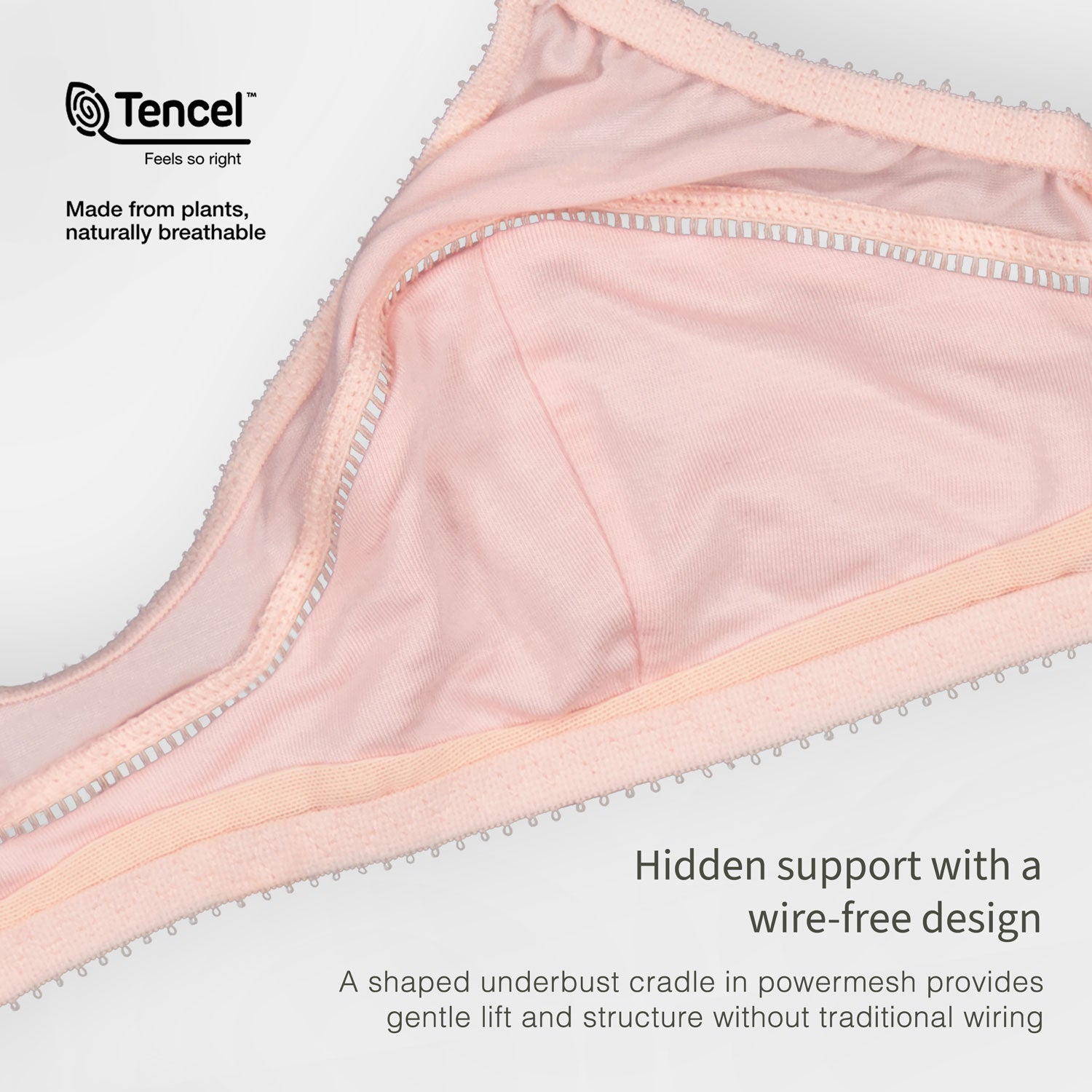
Lingerie sits closer to the body than almost any other garment. Yet most bras are made primarily from synthetic fibres that don’t breathe particularly well.
Breathability affects temperature regulation, moisture management and comfort, especially in an area as sensitive as the chest. When something is worn for eight to twelve hours a day, material choice becomes more than an aesthetic decision.
For me, it raised a simple question: Why are we so thoughtful about what we wear on the outside, but not about what sits directly against our skin?

Designing with the body in mind
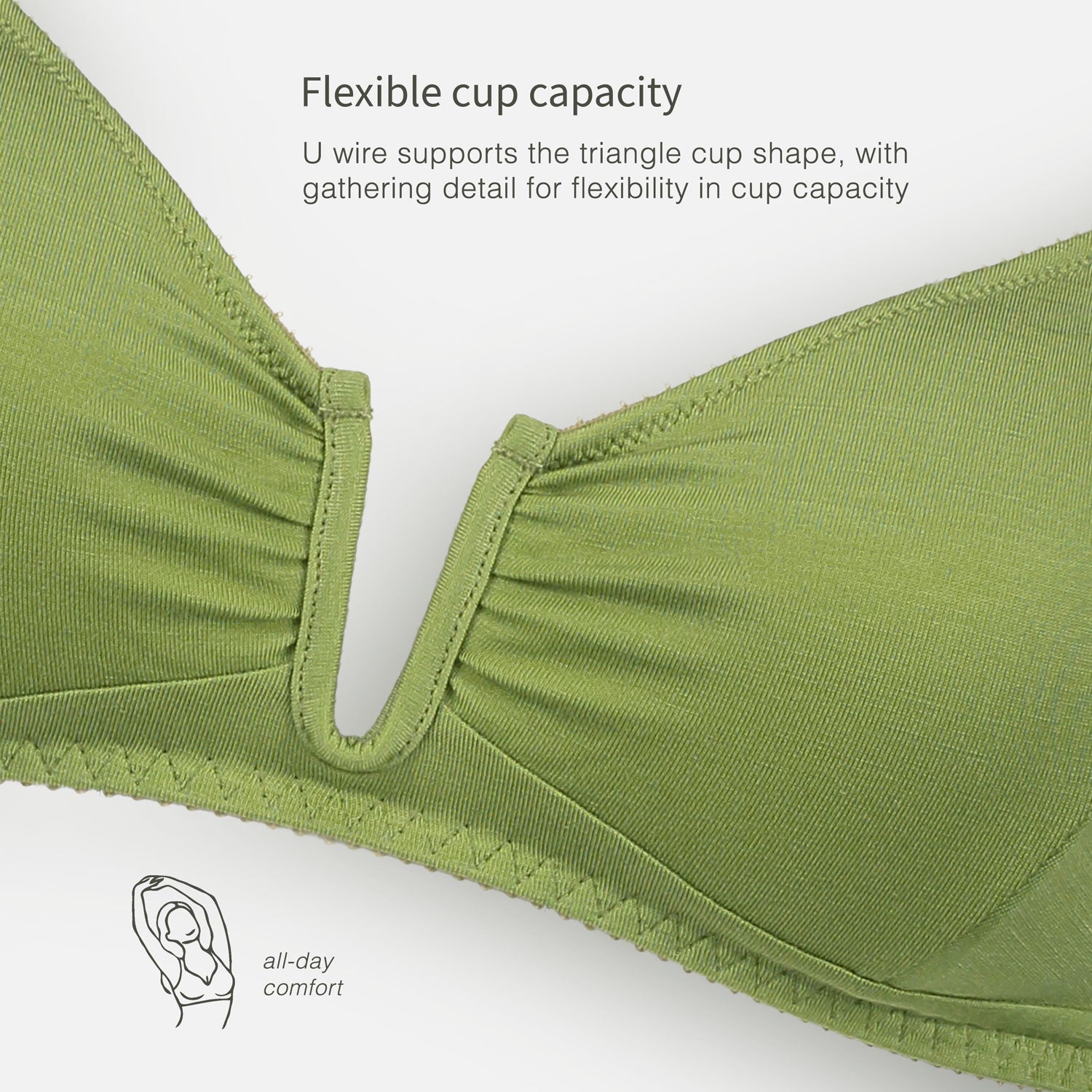
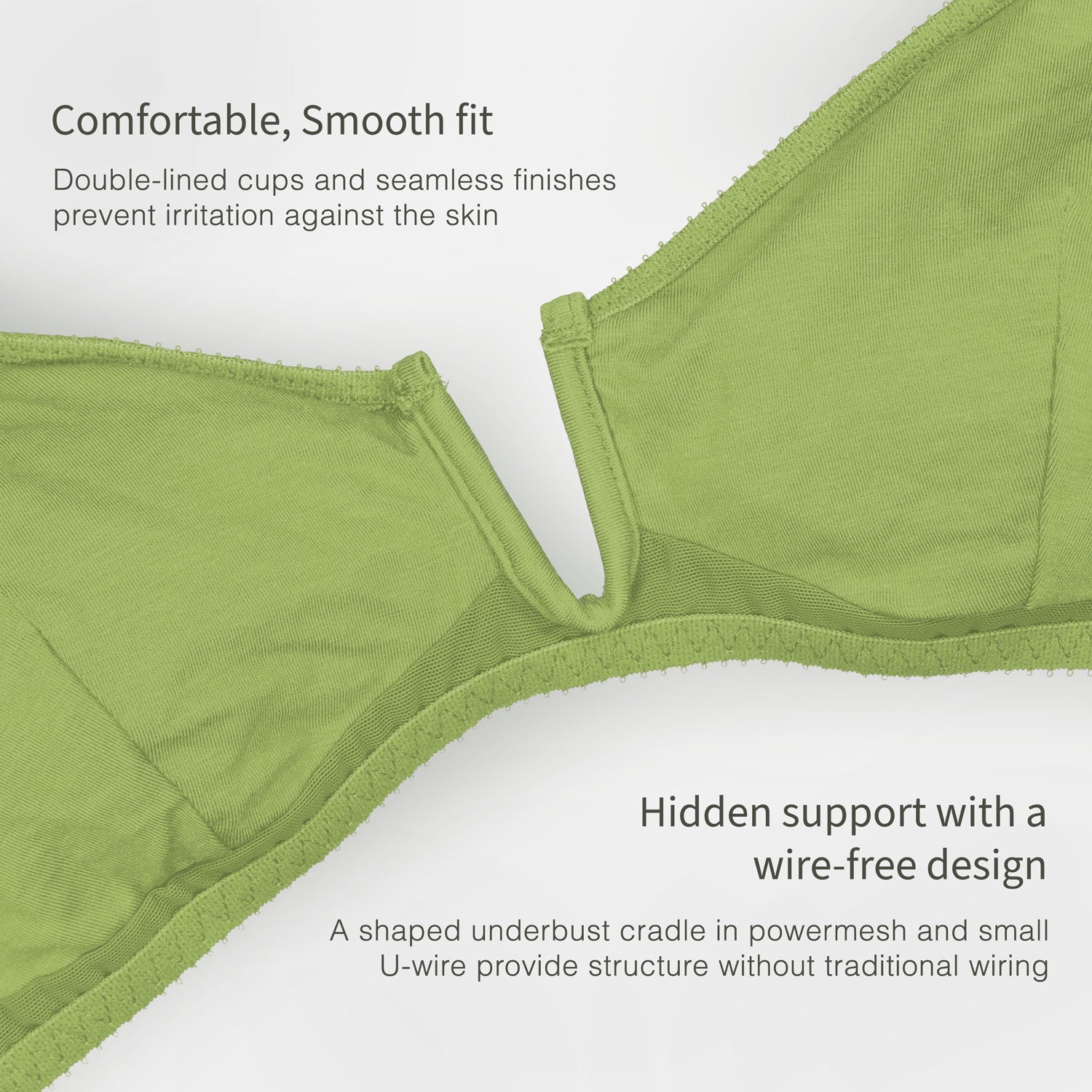
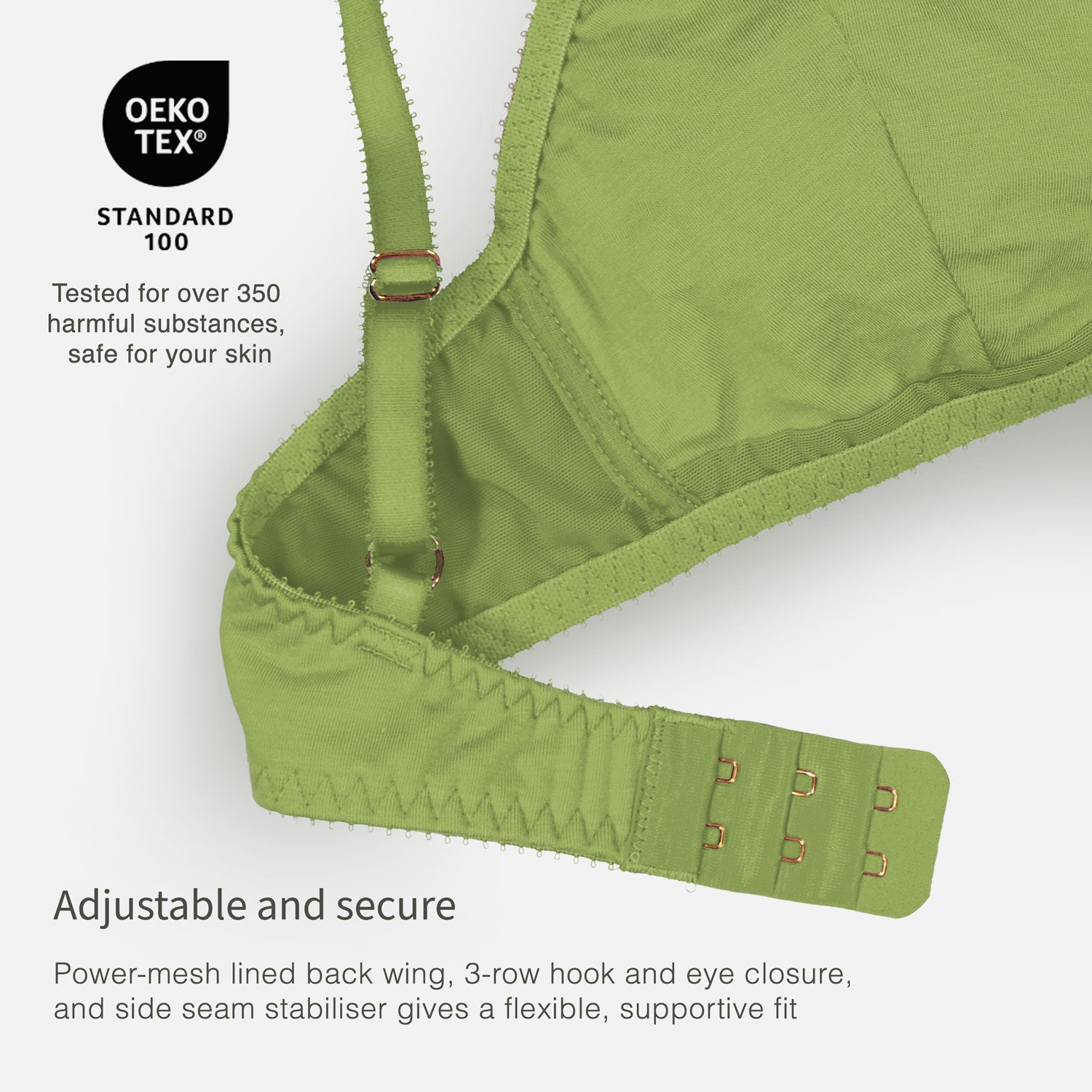
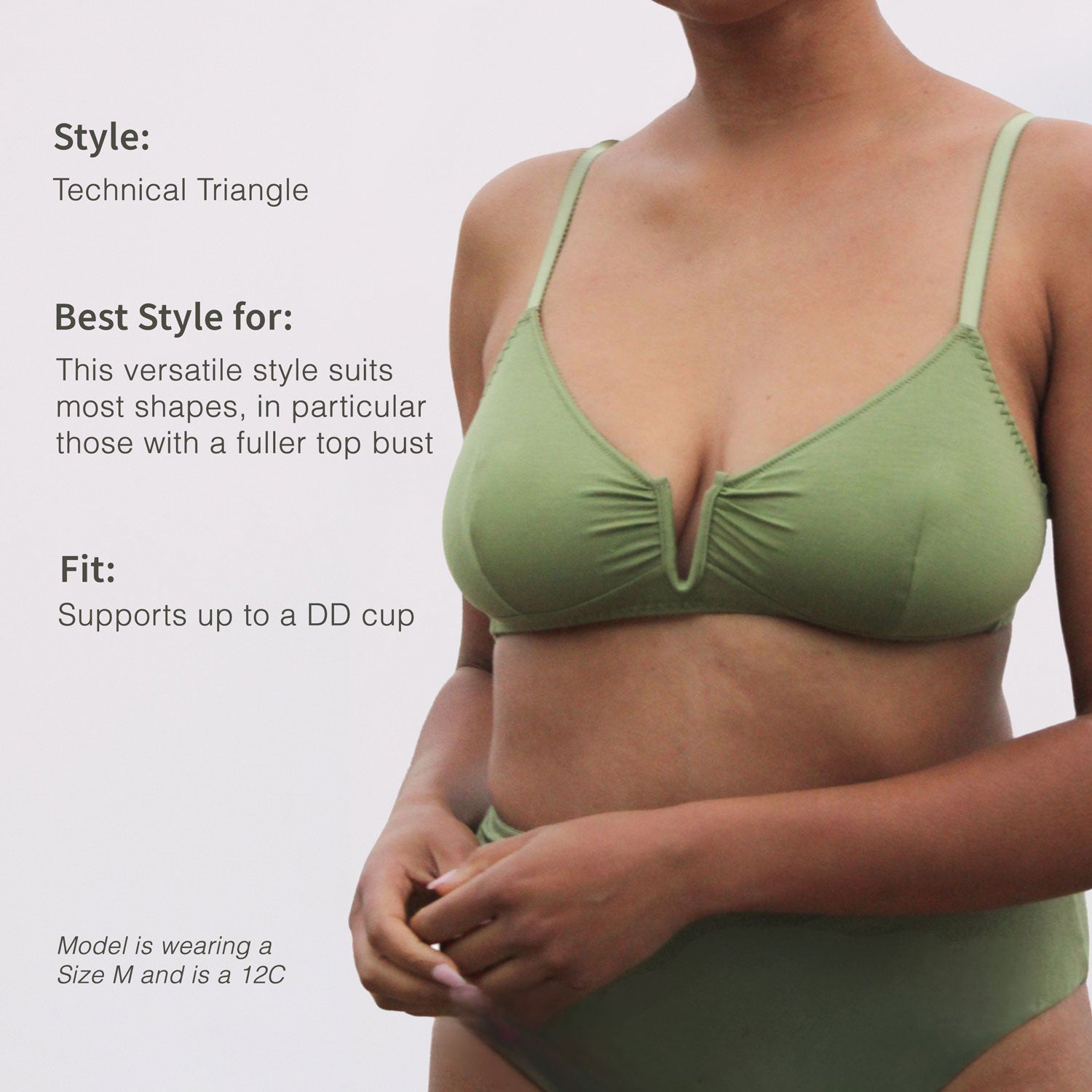
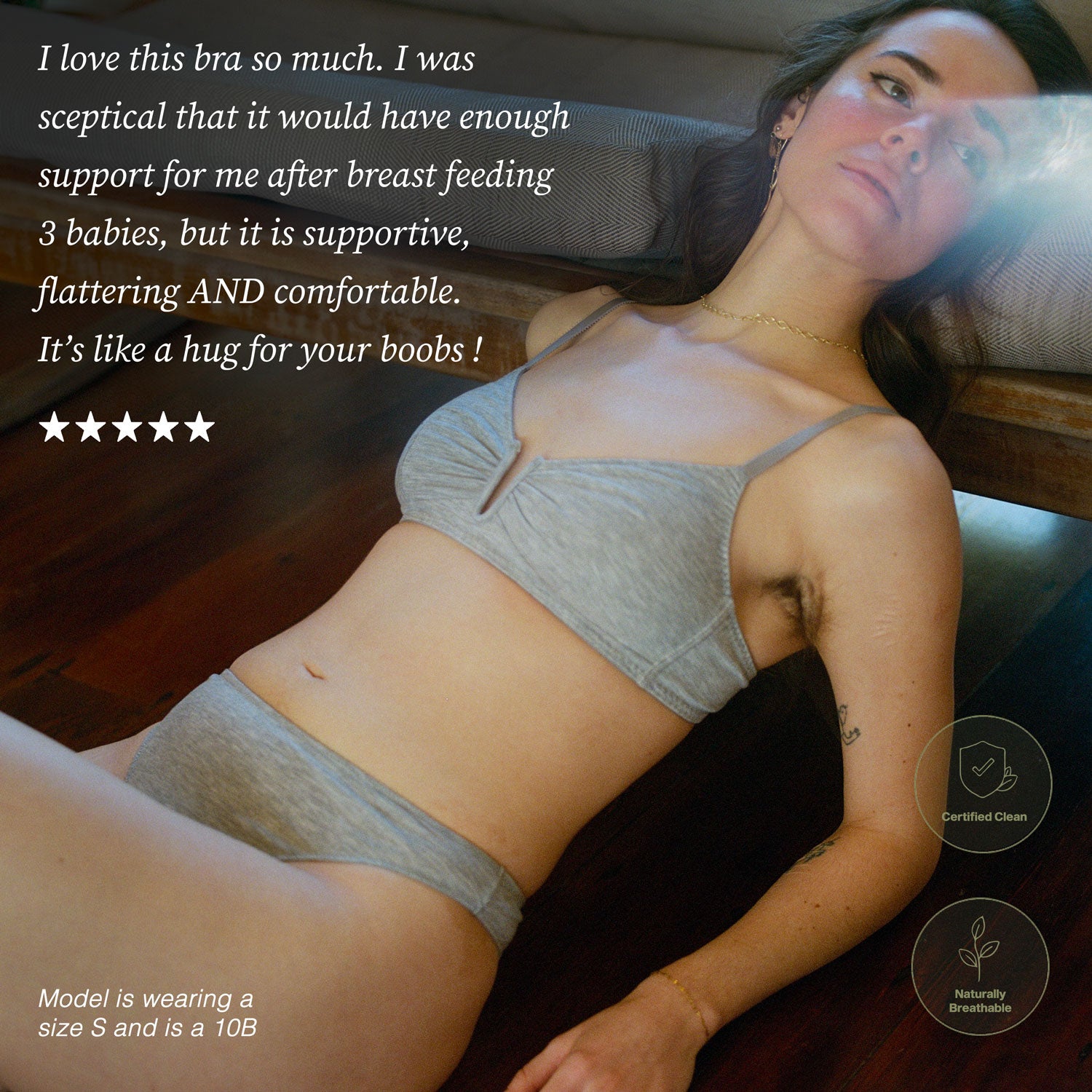
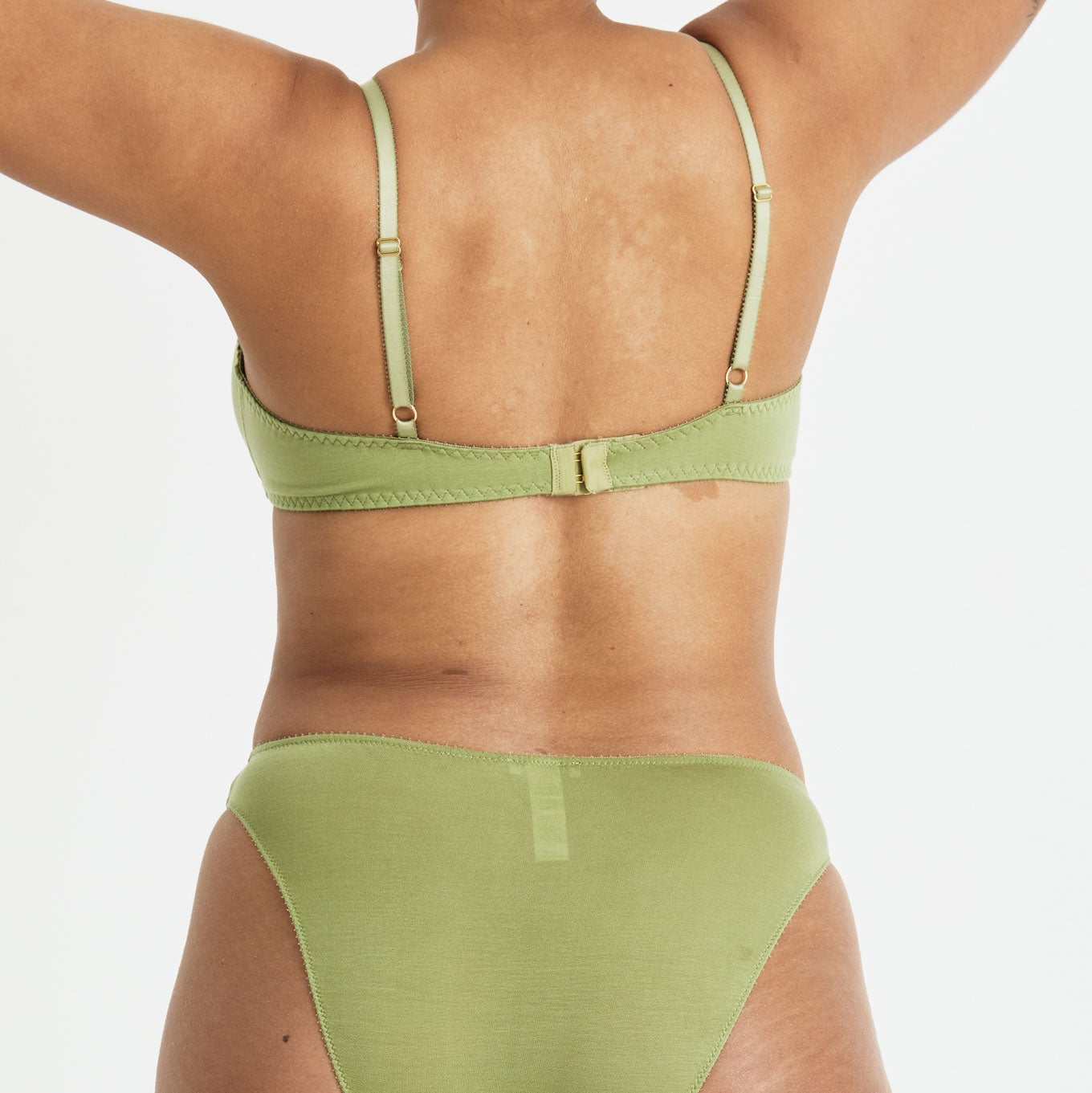
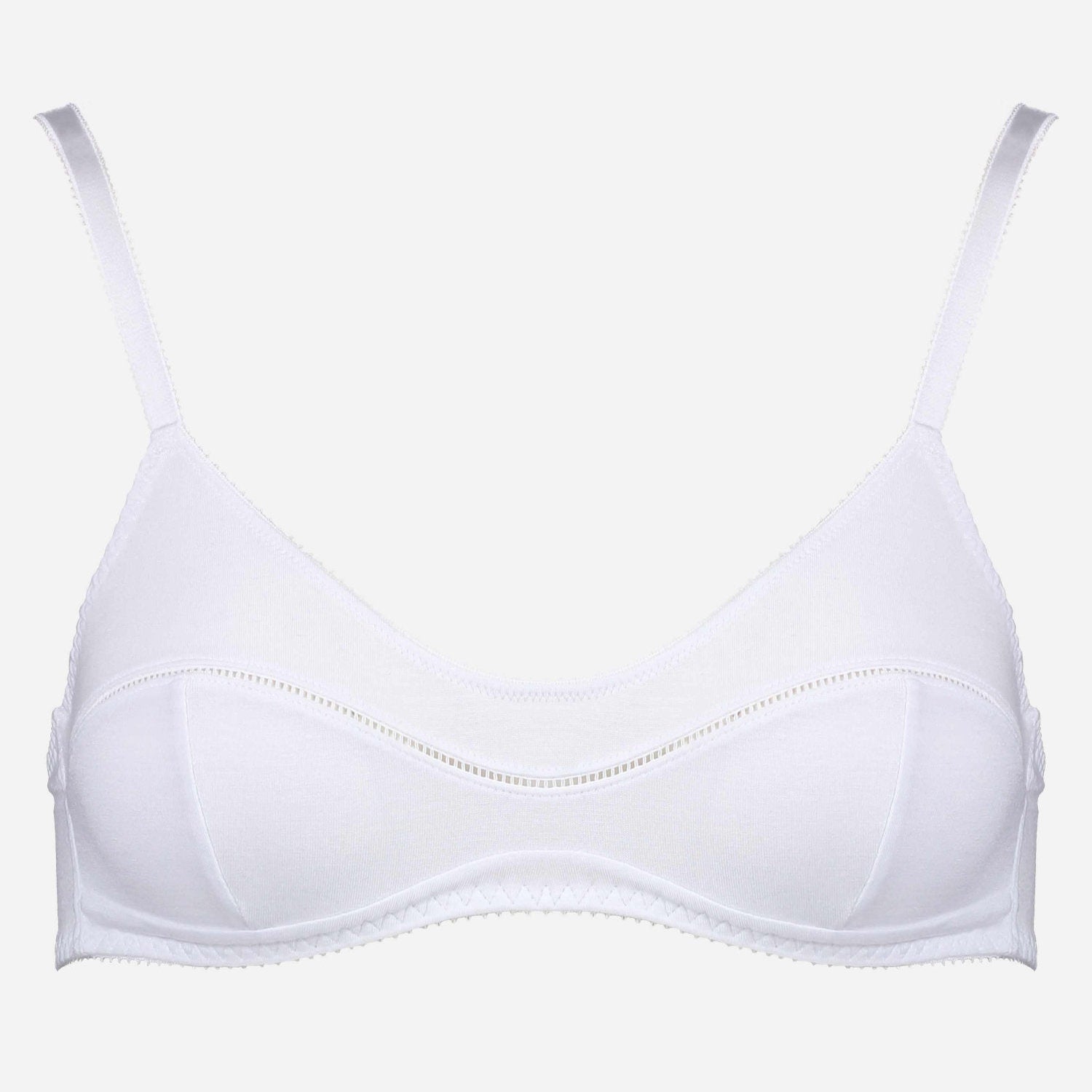
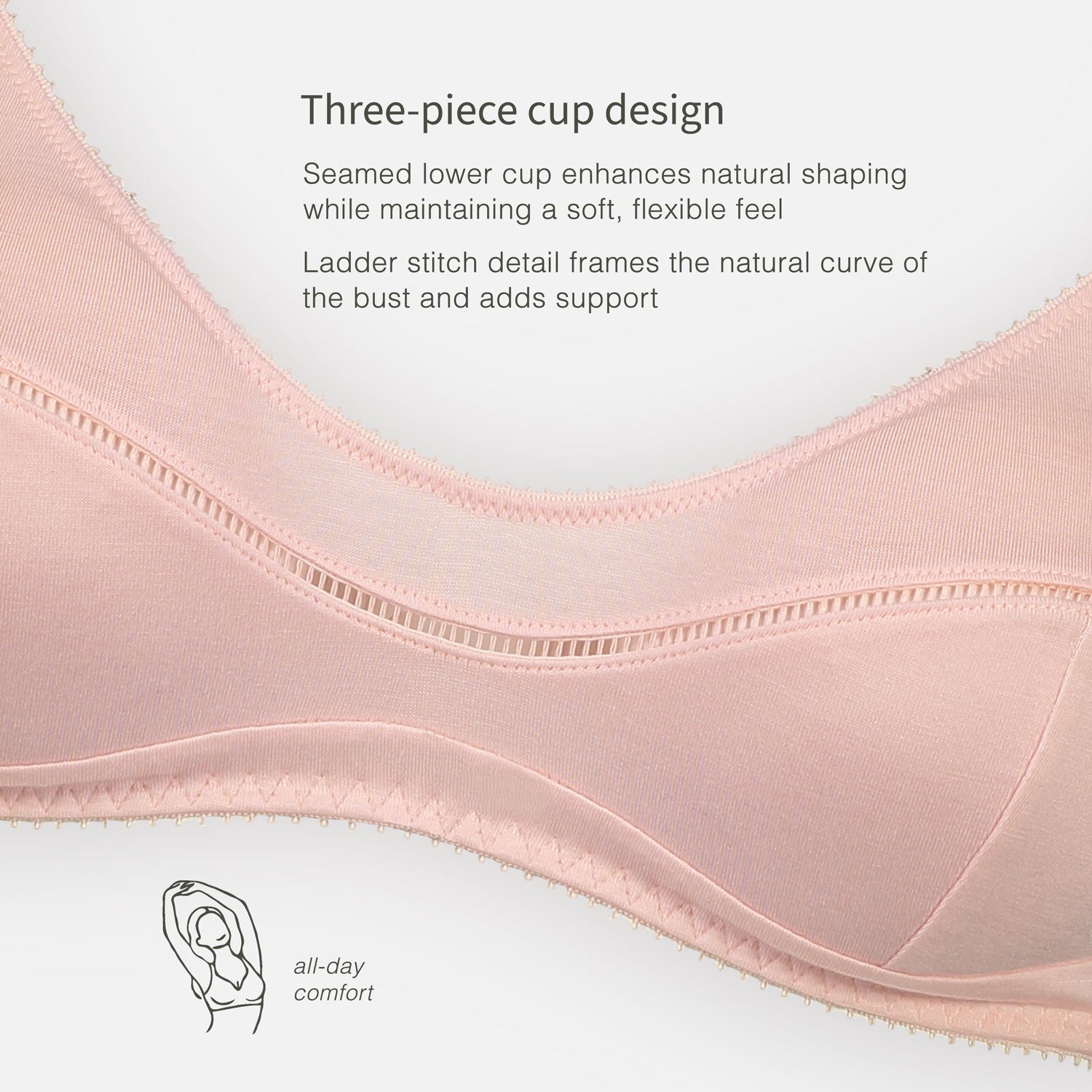
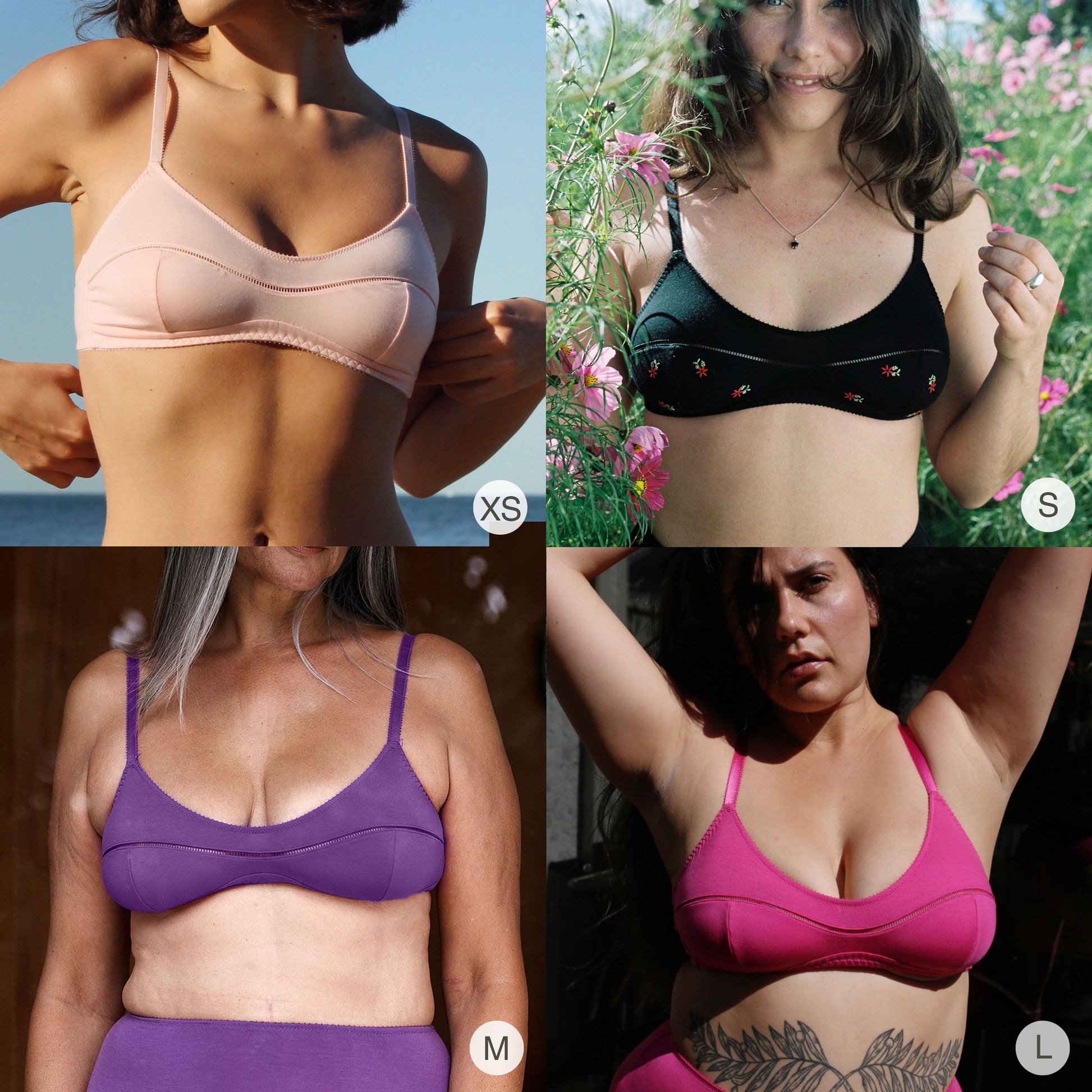
Wire-free doesn’t mean unsupported. In fact, designing support without a rigid structure requires more thought, not less.
Support can come from:
-
Considered pattern cutting
-
Fabric behaviour and recovery
-
Balance across the body
-
How a garment moves, not just how it looks
When all of these elements work together, a bra can support the body while allowing it to breathe, shift and exist as it is.
An invitation, not a rule
This isn’t about telling women what they should or shouldn’t wear.
It’s about paying attention. Questioning what we’ve been taught to accept as normal.
Recognising that comfort, breathability and ease are forms of feedback, not indulgence.
Lingerie doesn’t need to transform the body to be beautiful. Sometimes, the most supportive thing it can do is simply allow the body to be itself.