The label inside your bra tells you the fabric composition - 80% polyamide, 20% elastane, and so on. What it doesn't tell you is where that fabric came from, or what it took to make it. Brands are only required to declare the end result, not the journey.
Most bra fabrics start as petroleum. The label won't say that either.
We wrote about this in an earlier blog post — the connection between synthetic lingerie fabrics and the petrochemical industry, and why the fabric closest to your breast tissue is worth thinking about. This post is about what we chose instead, and the full story of how it gets made.
What is TENCEL™?
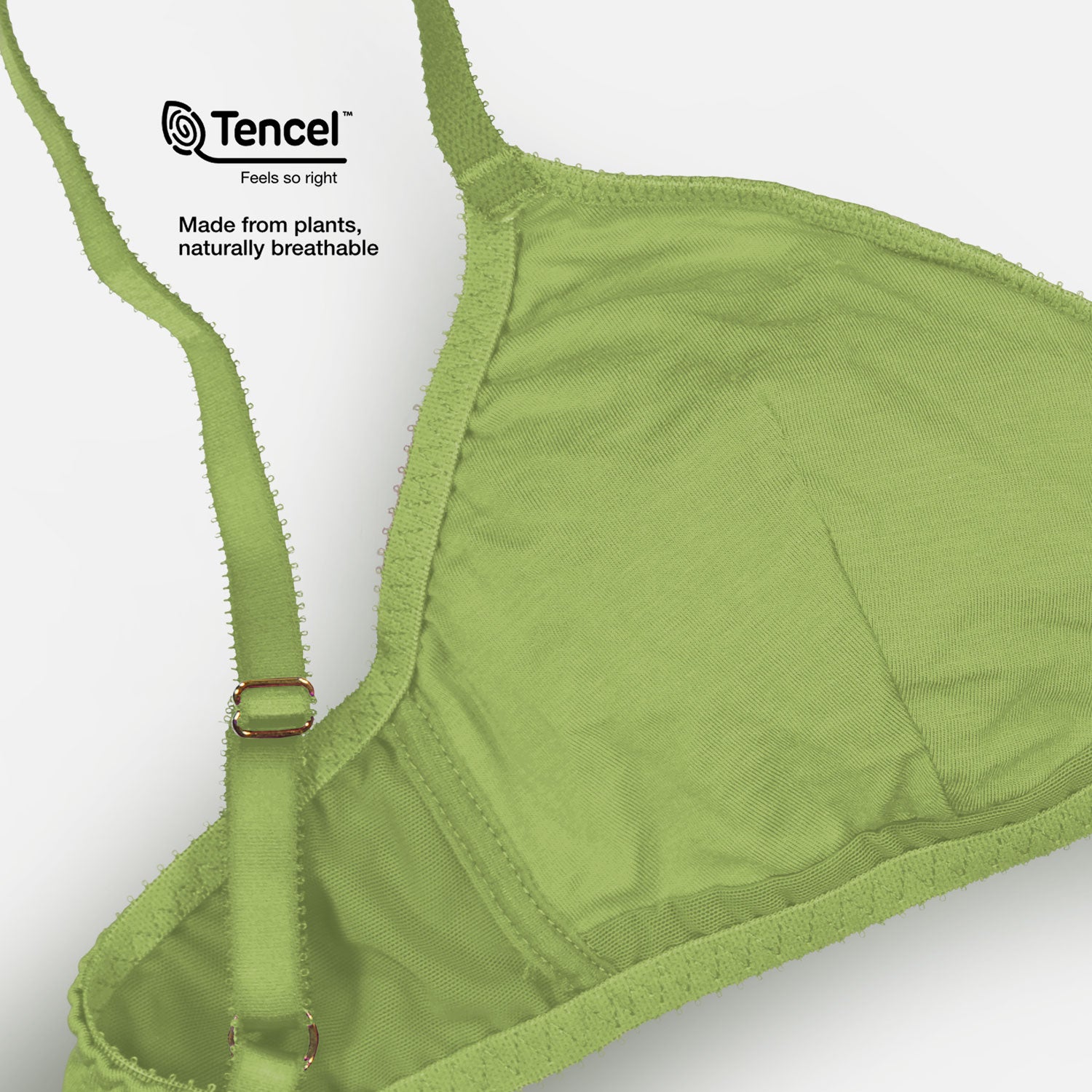
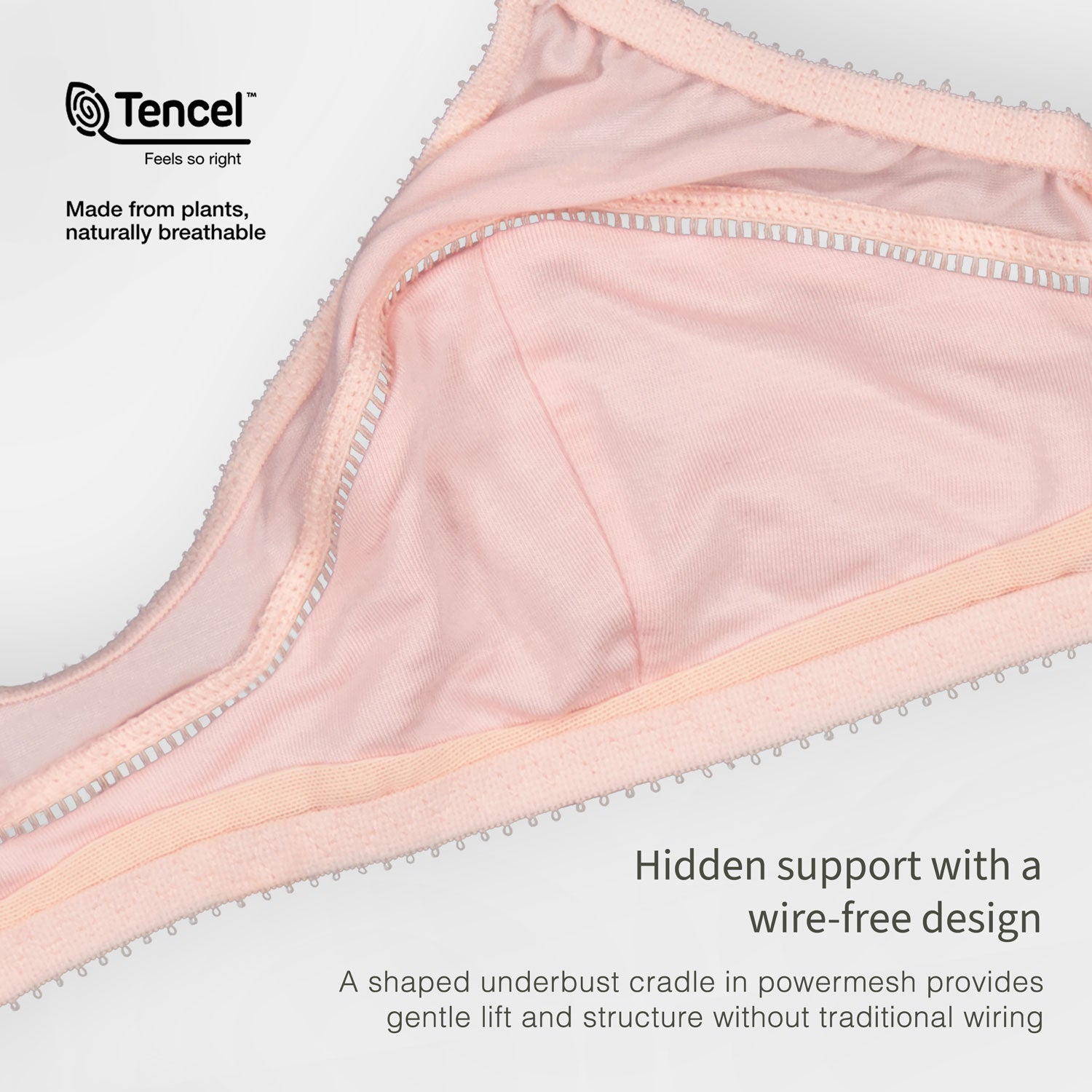
TENCEL™ is a trademarked fibre made from sustainably sourced wood pulp, primarily beechwood and eucalyptus by Lenzing AG, an Austrian company with decades of experience producing fibres from natural raw materials. The specific fibre we use at Videris is TENCEL™ Lyocell, produced using a closed-loop process that recovers and reuses its water and solvents. It's soft, breathable, and nothing to do with the petrochemical industry. That's why we chose it.
Here's the full journey, from where it starts to what it becomes.

SOIL
Everything starts here. The trees that become TENCEL™ are grown in sustainably managed forests, rooted in certified, responsibly sourced land. TENCEL™ Lyocell as a fibre is biodegradable under the right conditions, a genuinely circular material story, from the earth and back again. (Our fabric also contains 5% elastane for stretch and recovery, which affects the overall biodegradability of the finished garment, but the core fibre itself tells a very different story from petroleum-derived synthetics.)

TREES
Beechwood and eucalyptus, both certified to FSC® (Forest Stewardship Council) standards. FSC® certification means the forests are managed to protect biodiversity, support local communities, and ensure harvested trees are replaced. This is a renewable raw material in the truest sense: grown, not extracted. Most synthetic fabrics come from fossil fuel reserves that took millions of years to form. The distinction matters.

WOOD
Once harvested, the raw material is wood. Not oil - wood. Natural cellulose, the same structural material found in the cell walls of all plants. At this stage in the process, nothing synthetic has entered the picture.

PULP
The wood is broken down into pulp, a process closer to papermaking than to textile manufacturing. The cellulose is dissolved to create a solution ready to be spun into fibre. The solvents used are captured and cycled back into production rather than released as waste.

FIBRE
This is where TENCEL™ becomes textile. The dissolved cellulose is extruded through fine spinnerets to create individual fibres. What makes TENCEL™ production distinctive is what happens to the solvent: 99.8% of it is recovered and reused in a closed loop, close to zero waste. This also distinguishes TENCEL™ Lyocell from older cellulosic fibres like viscose or rayon, which used open-loop processes with significant chemical waste. The result is a fibre that is soft, breathable, and moisture-wicking, chosen specifically because it's the fabric sitting closest to breast tissue.

YARN & FABRIC
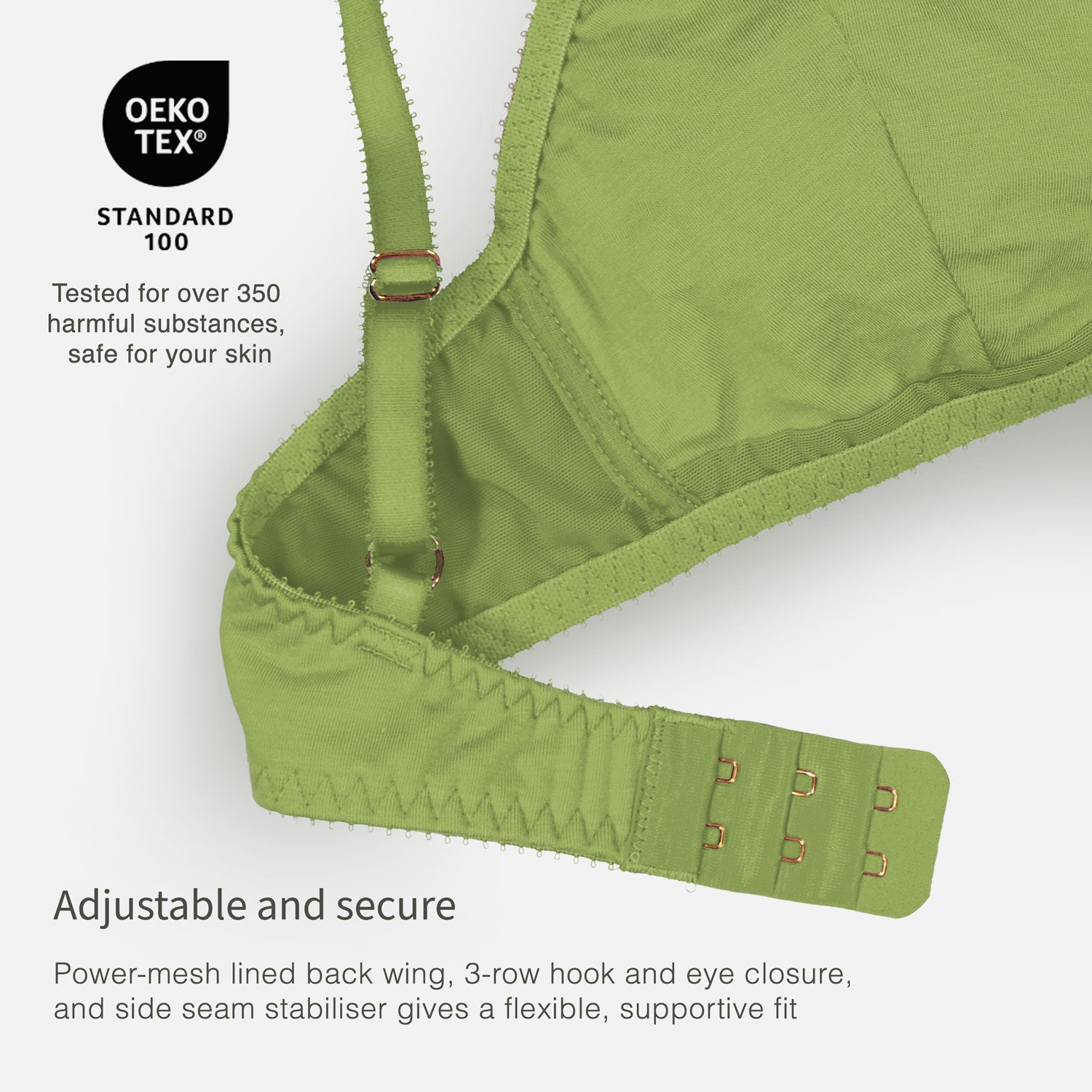
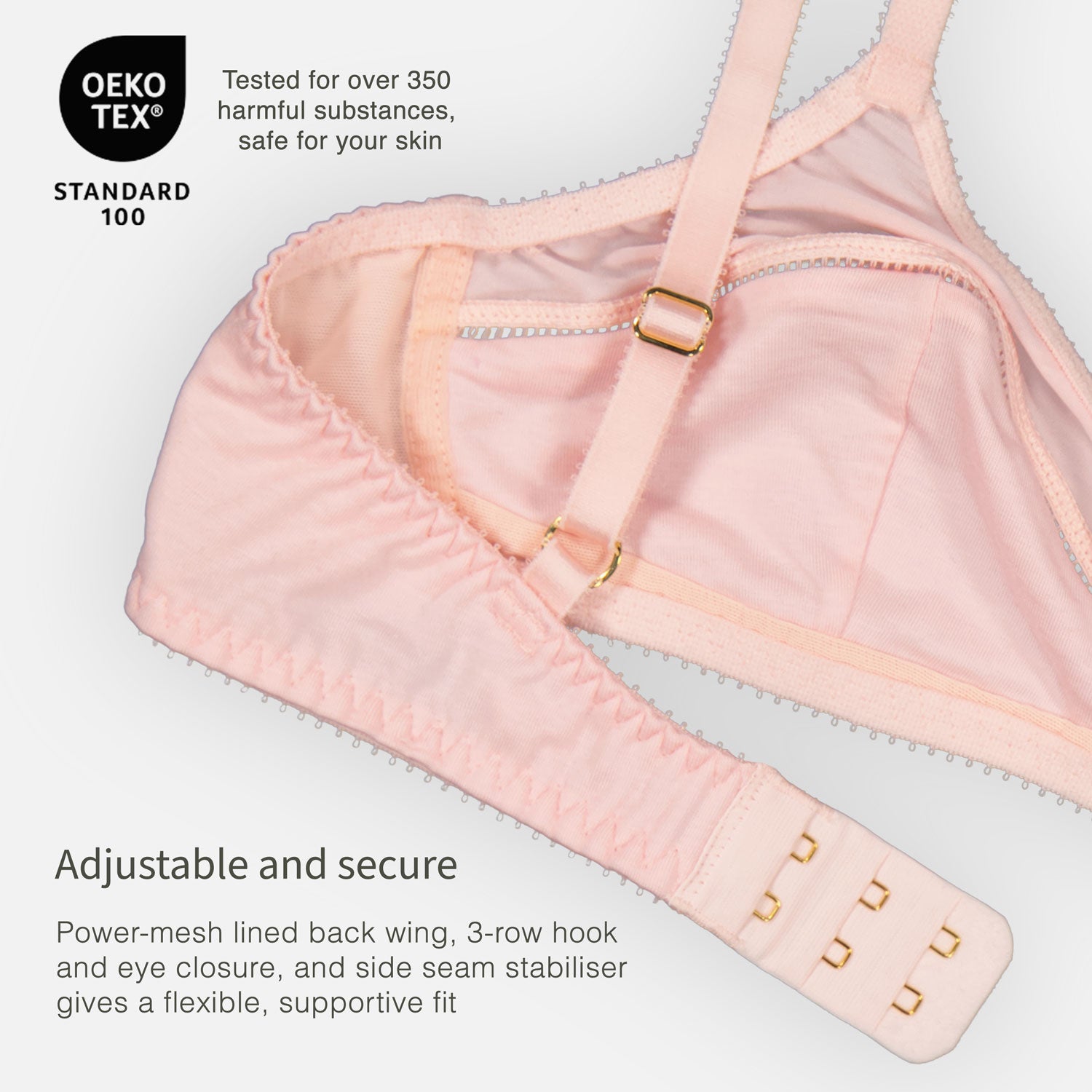
The fibre becomes yarn, then fabric. The finished fabric is certified to OEKO-TEX® STANDARD 100, a globally recognised standard that screens against over 1,000 harmful substances. For items in direct skin contact like underwear, the limits are stricter than for outerwear. We hold this certification for every component in our bras and knickers, including the synthetic parts.

YOUR VIDERIS BRA
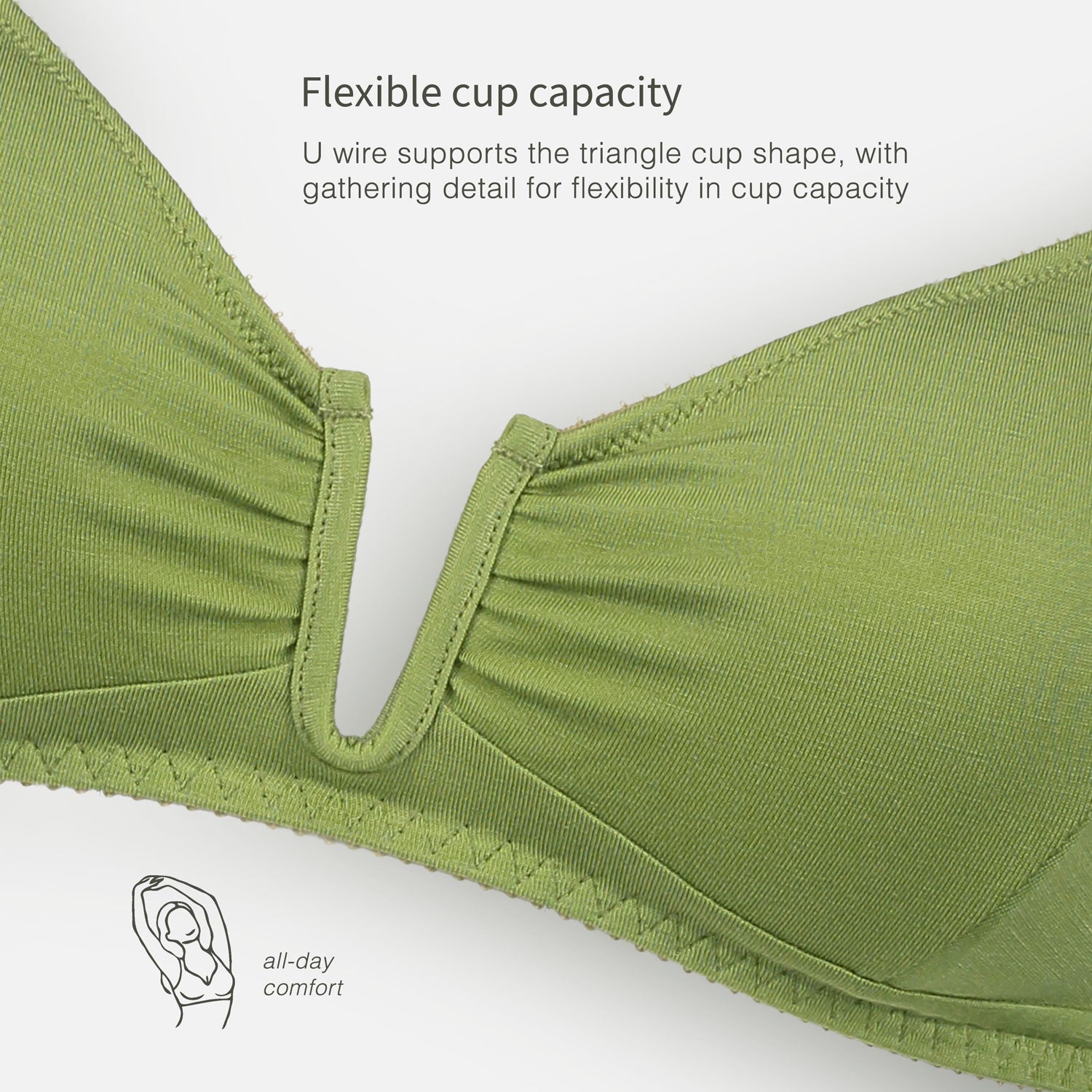
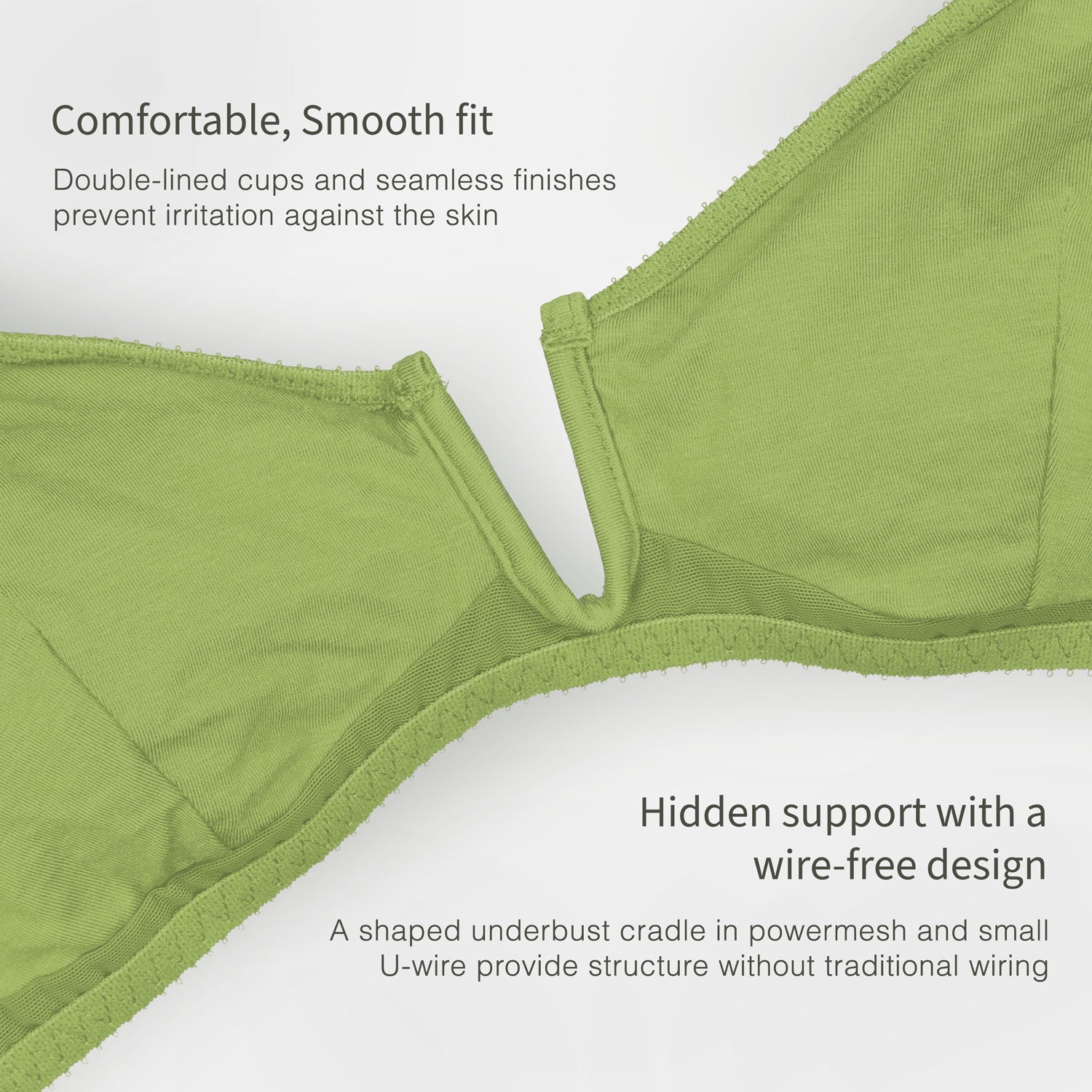
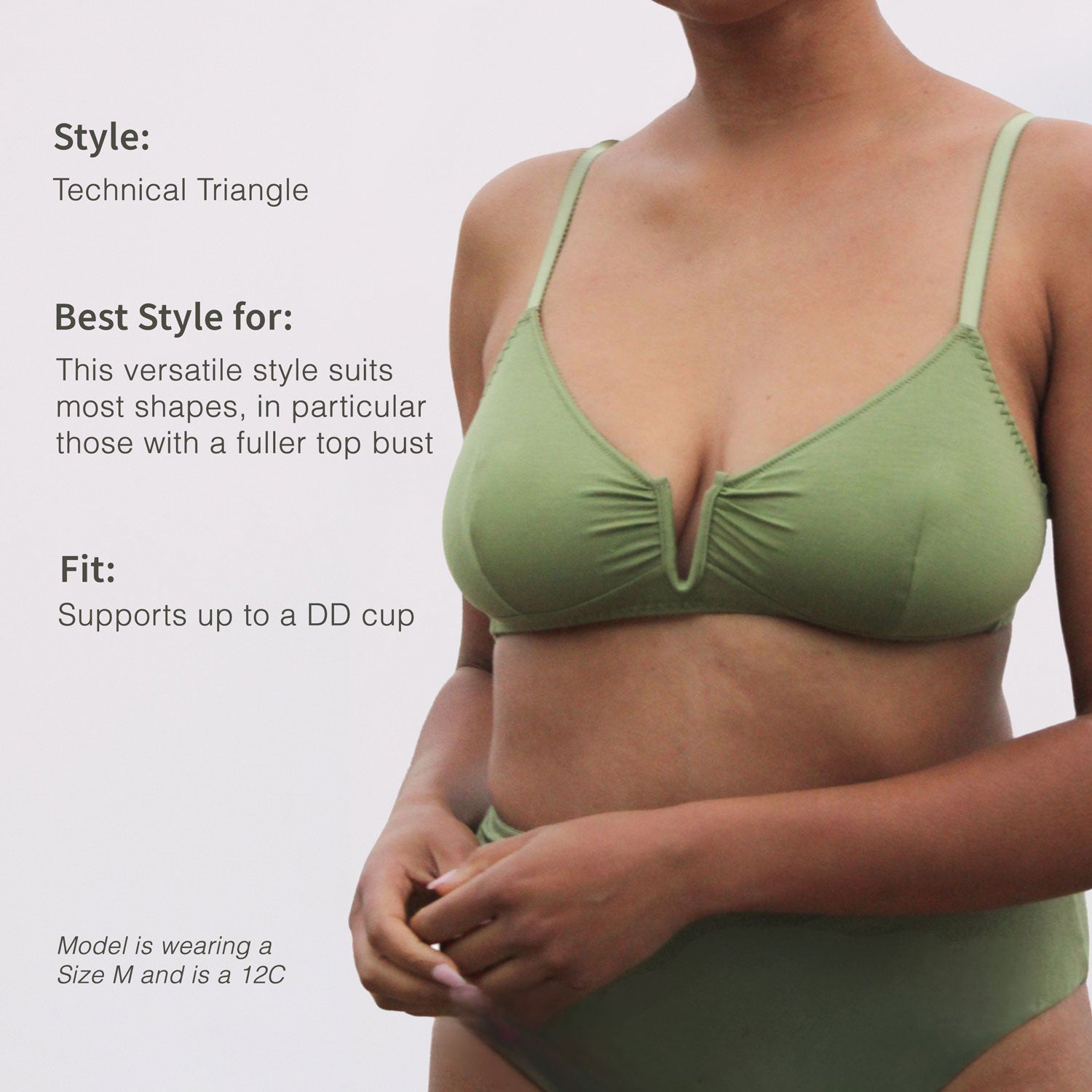
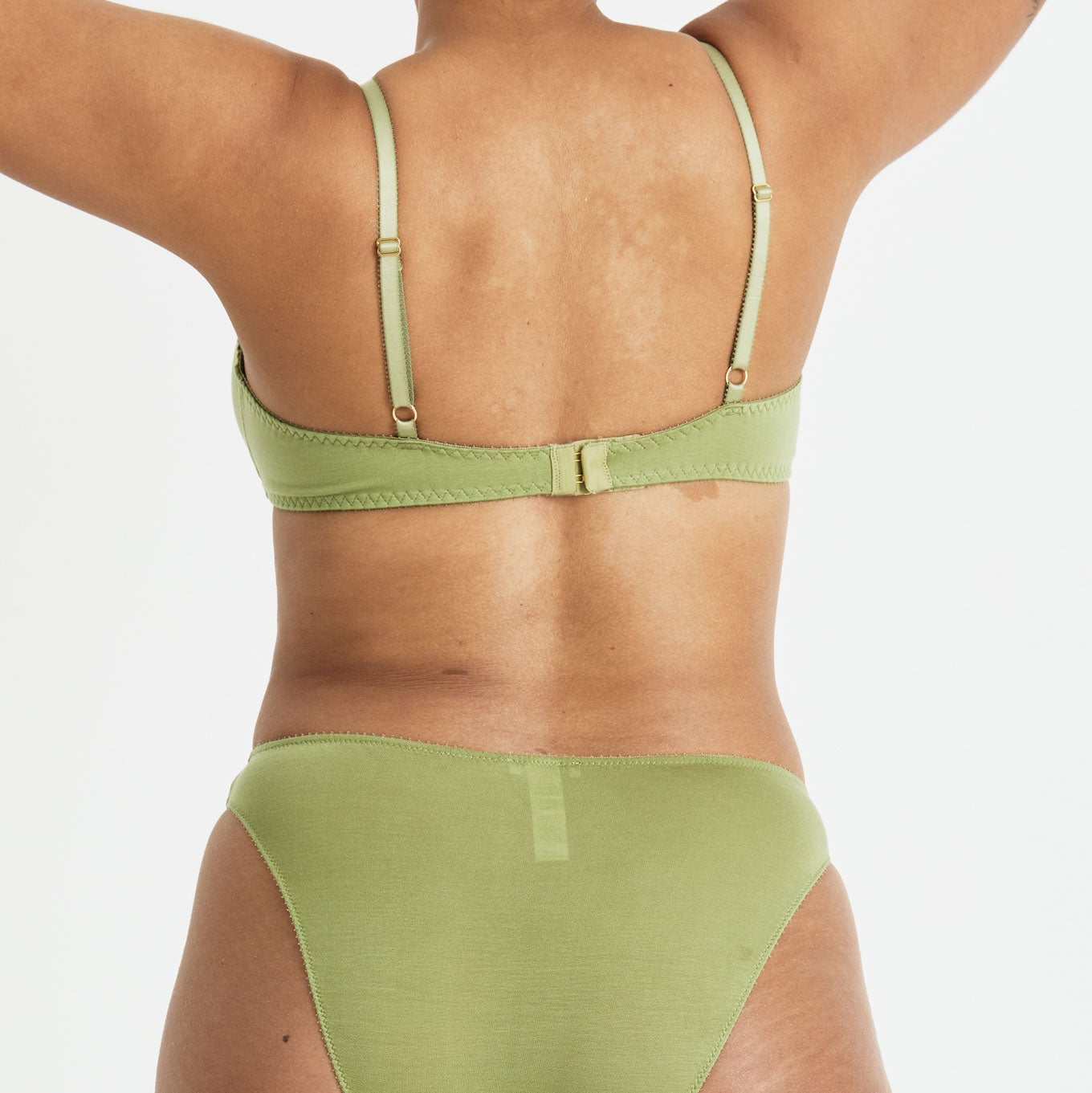
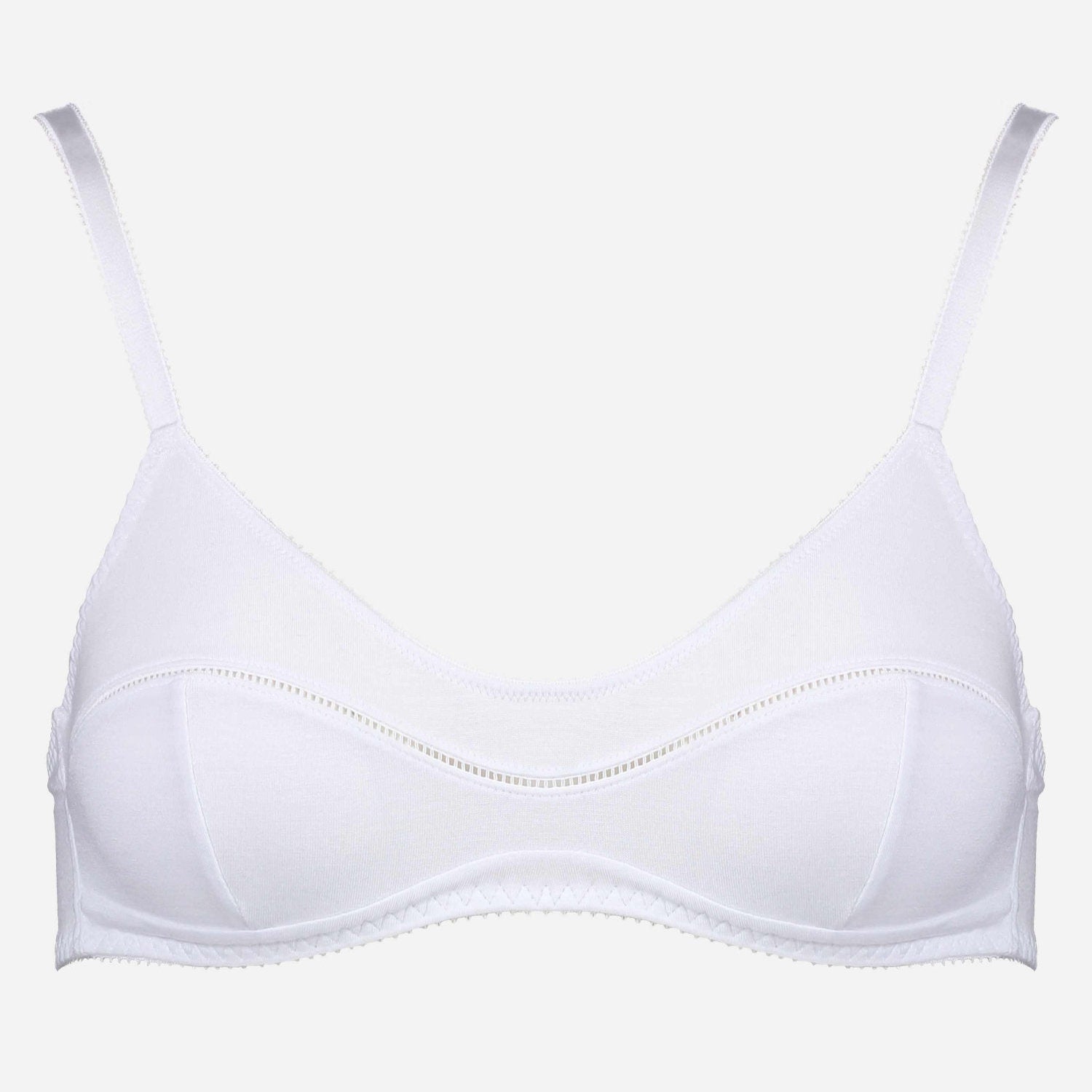
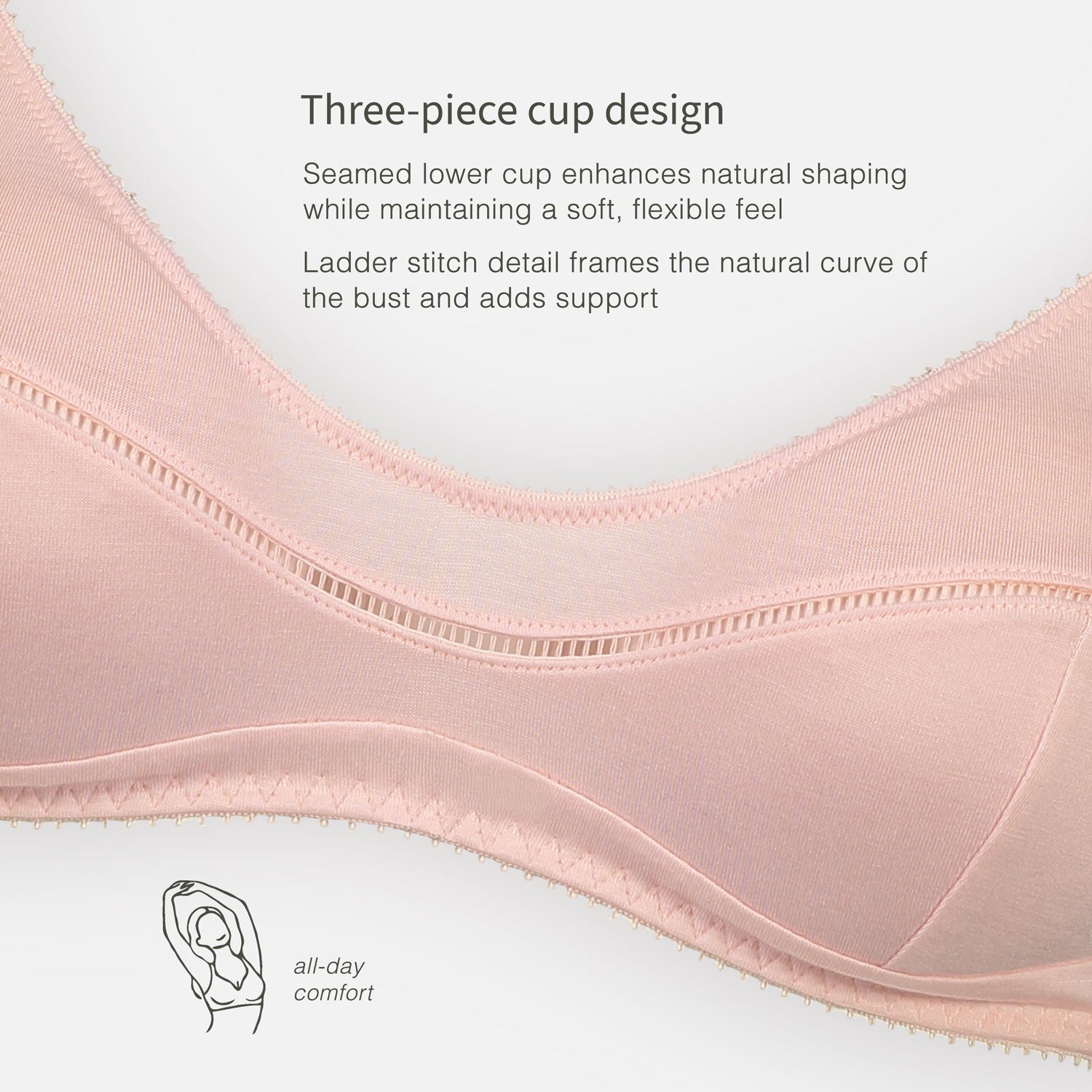
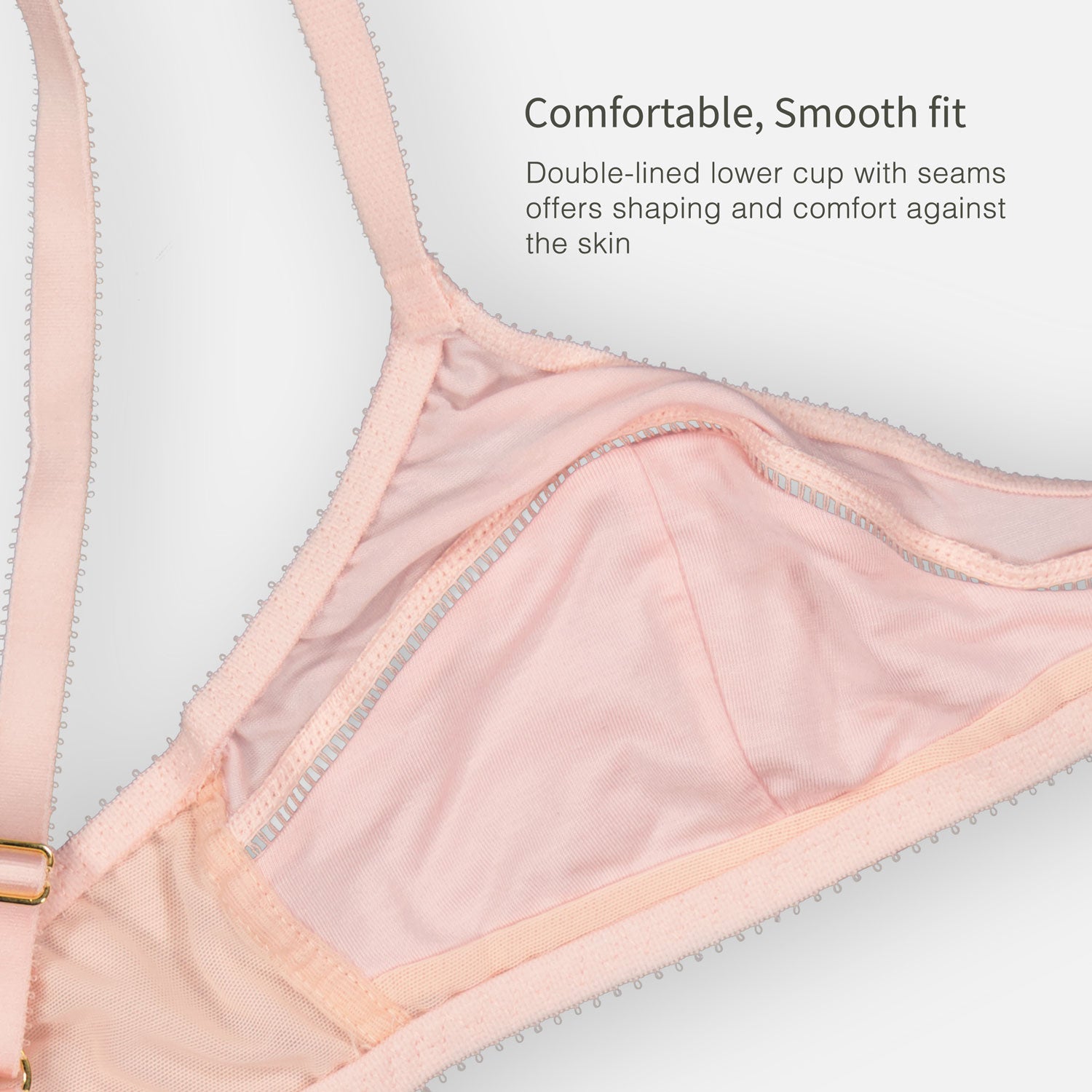
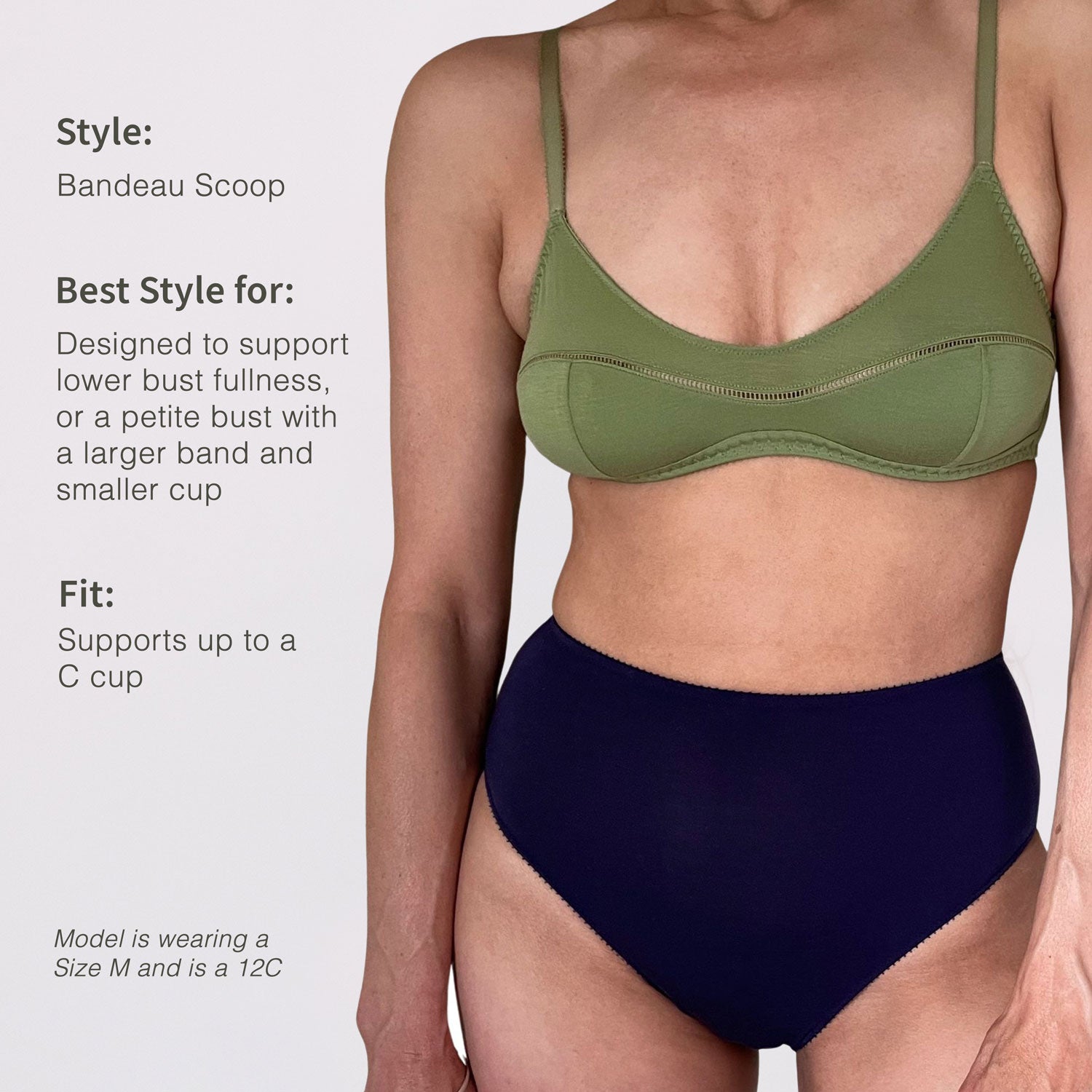
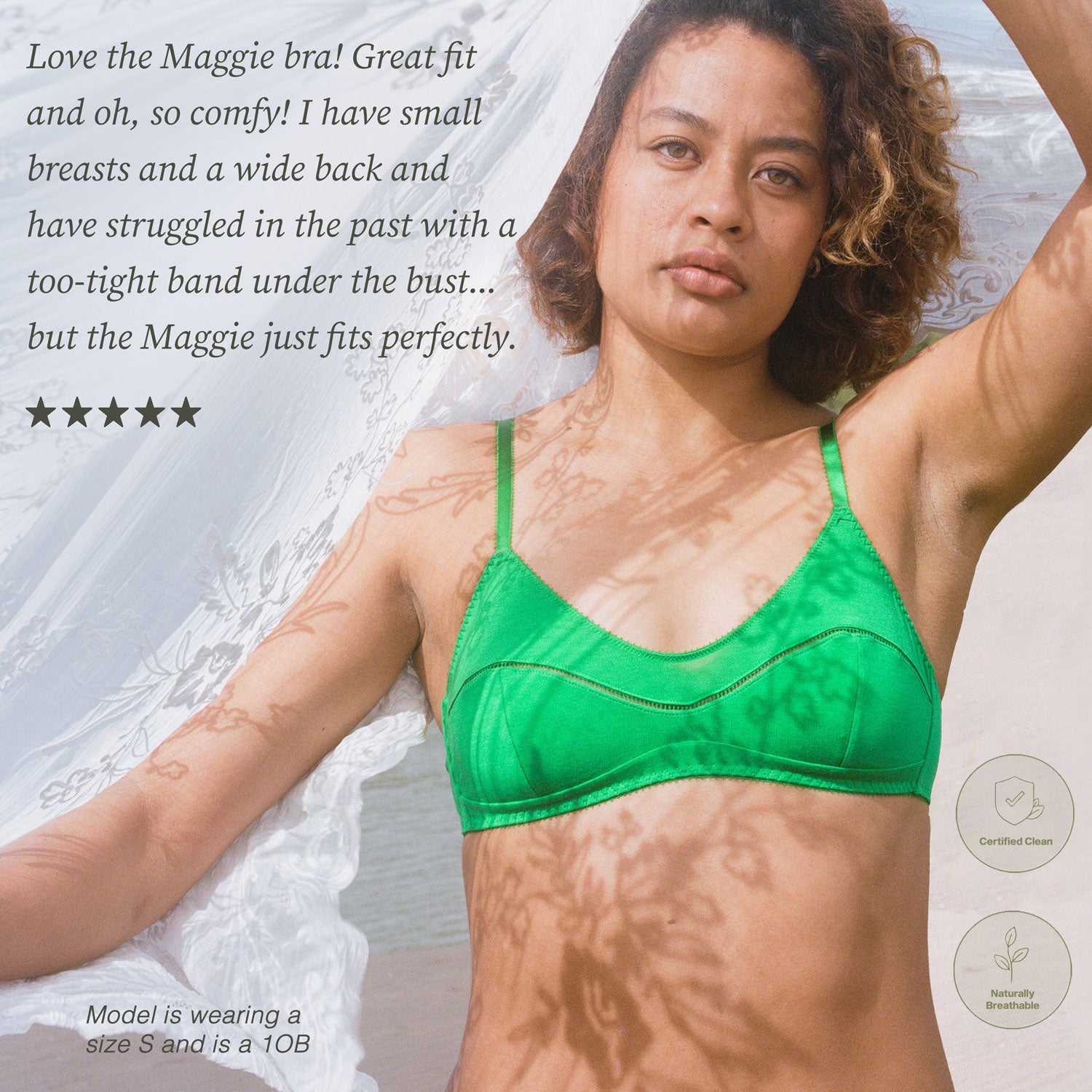
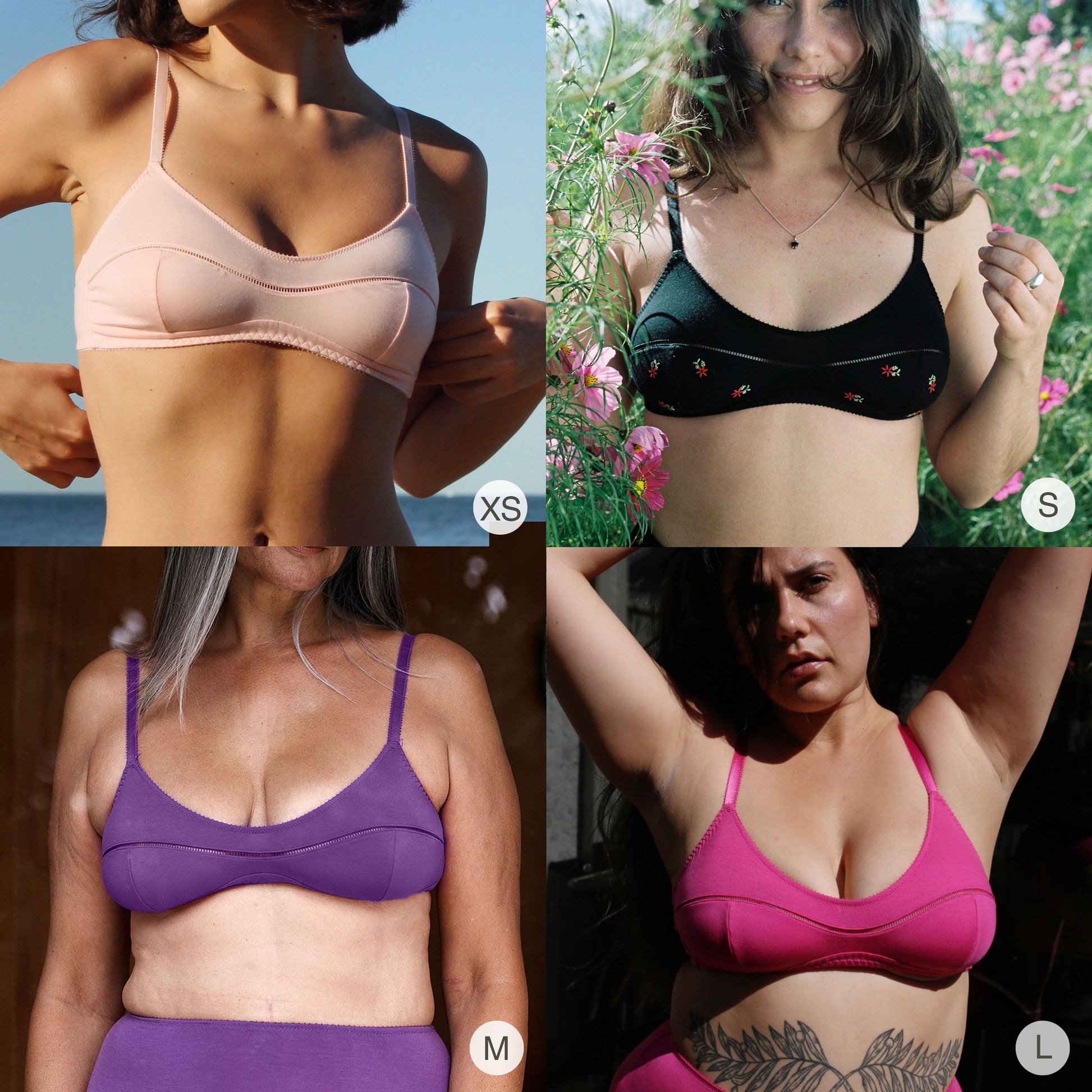
95% TENCEL™. The cups and lining - the fabric against breast tissue - is natural. The remaining 5% is elastane for stretch and recovery; we also use a small amount of powermesh in the underband and back wing for longevity and structural support. There is no credible natural alternative to either that performs across repeated washing. Every component holds the same OEKO-TEX® STANDARD 100 certification.

YOUR VIDERIS KNICKERS
Aside from the elastics, made entirely from TENCEL™. The fabric against your skin is the same closed-loop, FSC®-certified, OEKO-TEX® certified material - soft, breathable, and not petroleum-derived.
Why it matters
Most people have never thought to ask what their bra is made from. The label doesn't invite the question, "80% polyamide" reads as fabric, not as a downstream product of the oil industry. Once you know, it's hard to un-know.
We're not a perfectly natural brand. We use synthetics where there's no credible alternative, but the fabric against breast tissue is TENCEL™.